

New homepage
Finally, the Norwegian Glacier Museum has a new and more modern website! It is now adapted to all types of devices; computer, tablet and smartphone.
Previously, we had our website in three languages: Norwegian, English and German. Now we also offer simple websites in 8 additional languages to meet the needs of an increasing number of nationalities.
We thank GASTA in Sogndal for their cooperation in the development of the new website!

Glacier paintings in Fjærland
The Norwegian Glacier Museum has carried out the annual front position measurements of three glaciers in Fjærland. The regenerated parts of Bøyabreen and Supphellebreen are 5 meters further forward this year compared to last year. The development of these varies depending on where the ice and snow avalanches occur each year.
The third glacier that the Norwegian Glacier Museum is measuring, Vetle Supphellebreen, retreated 4 meters since 2012. The measurements on this glacier are made directly on an active glacier arm from the ice cap of Jostedalsbreen.
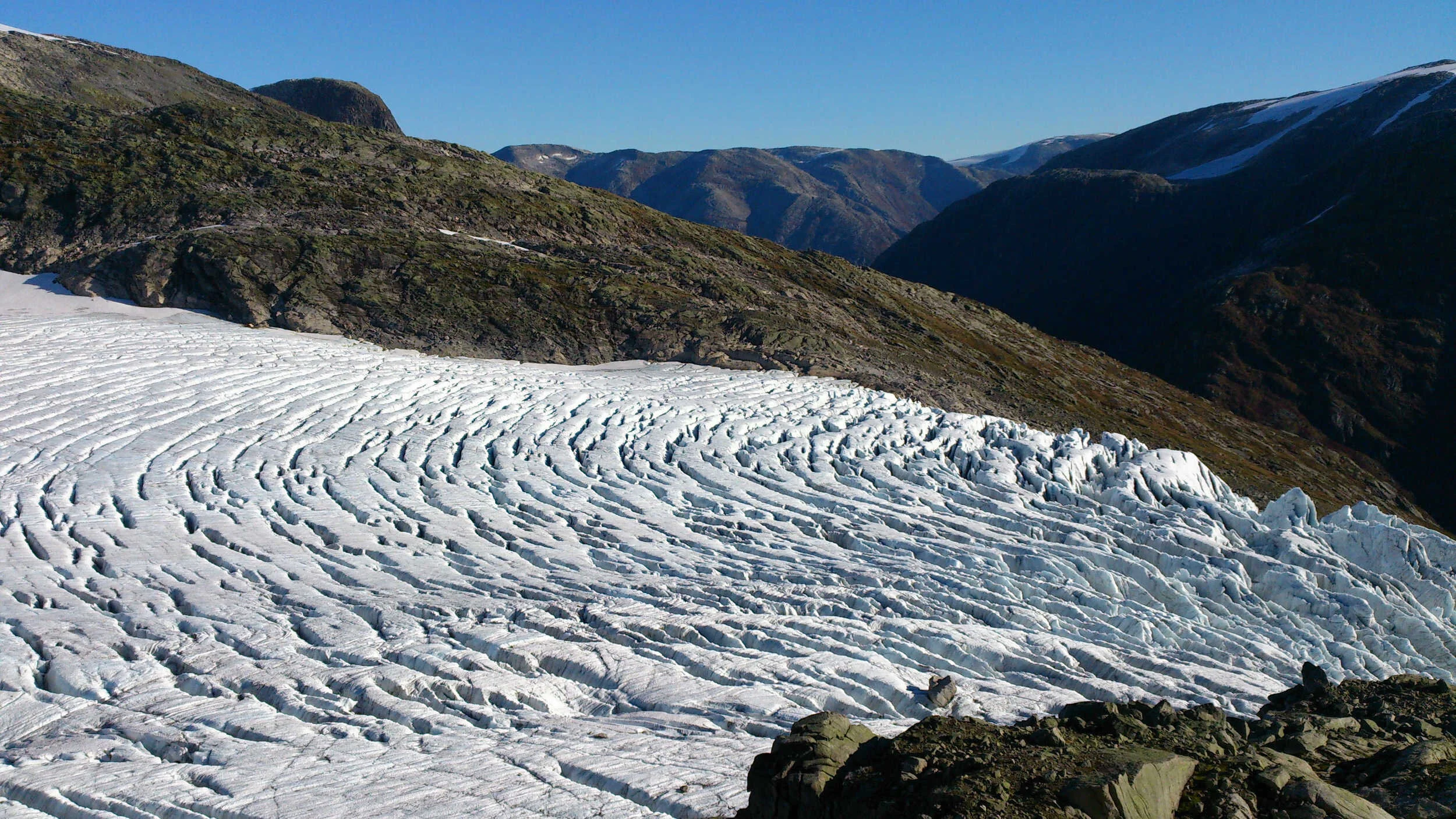
Vetle Supphellebreen October 2013. Photo: Pål Gran Kielland.
This year we will also start front position measurements on Haugabreen in Jølster. This glacier arm emerges from the plateau glacier Myklebustbreen, which is Norway's eighth largest glacier.
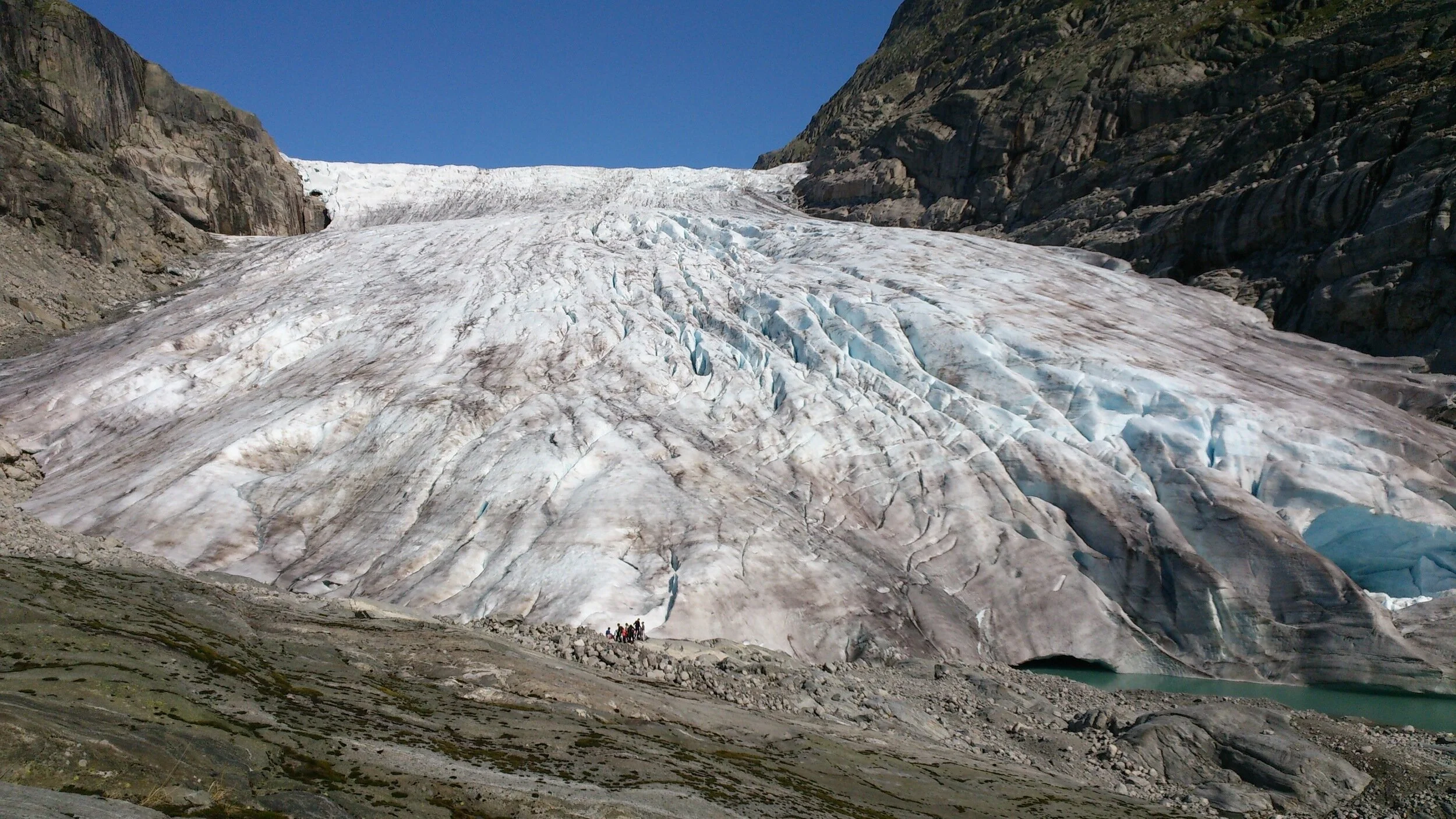
Haugabreen glacier August 2013. Photo: Pål Gran Kielland.
The measurements were made for NVE (Norwegian Water Resources and Energy Directorate).

Follow 12 students on Tunsbergdalsbreen
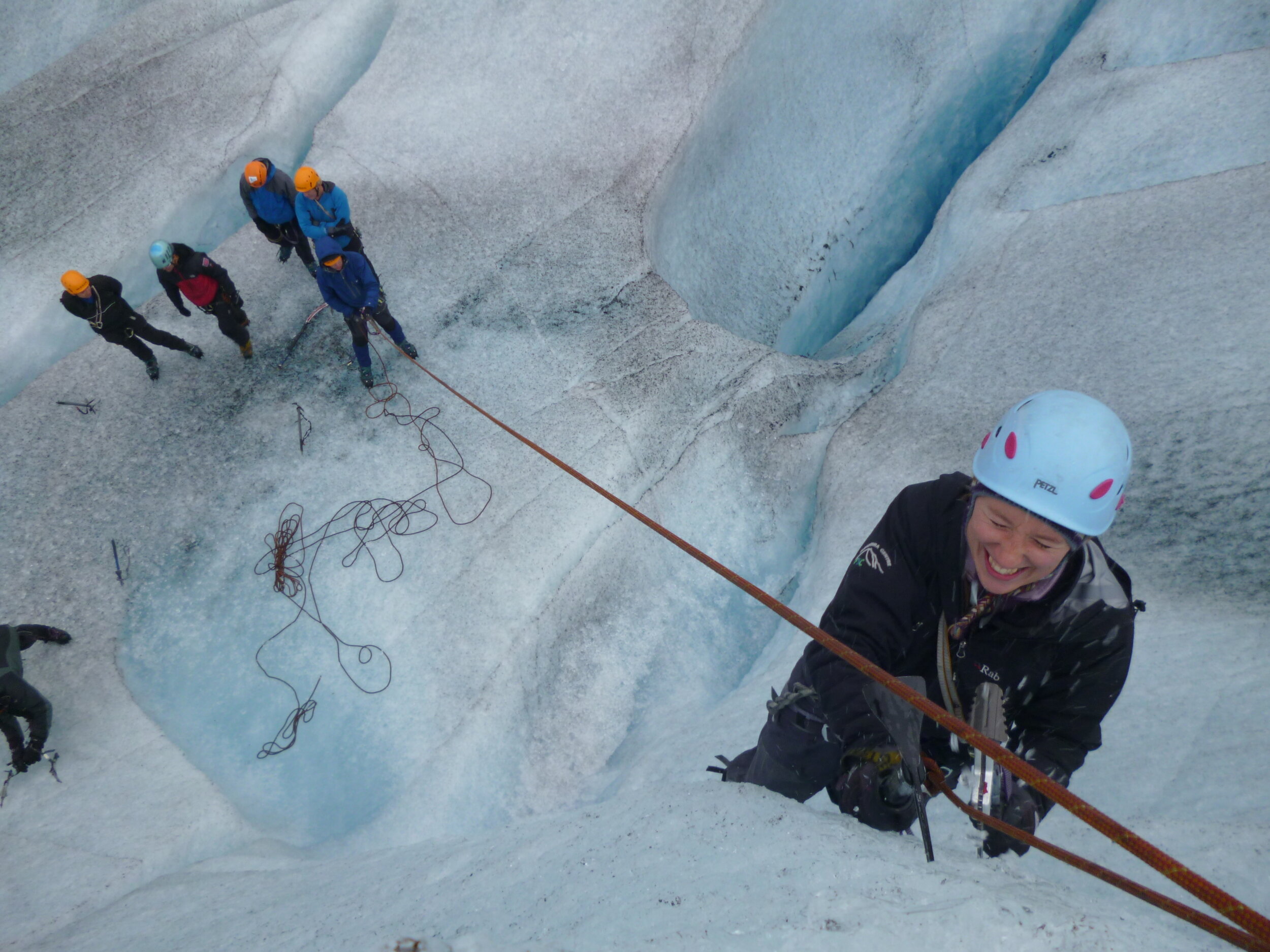
Ice climbing on Tunsbergdalsbreen 2012. Photo: Katy Boreham.
The fieldwork is part of the Tunsbergdalsbreen Project, which is being organized for the 5th consecutive year. The project is a collaboration between the Norwegian Glacier Museum, the Field Studies Council and the Brathay Exploration Group.
Their time in beautiful nature and magnificent glacial landscapes can be followed on the blog of the Tunsbergdalsbreen Project.

Book night Saturday June 22nd
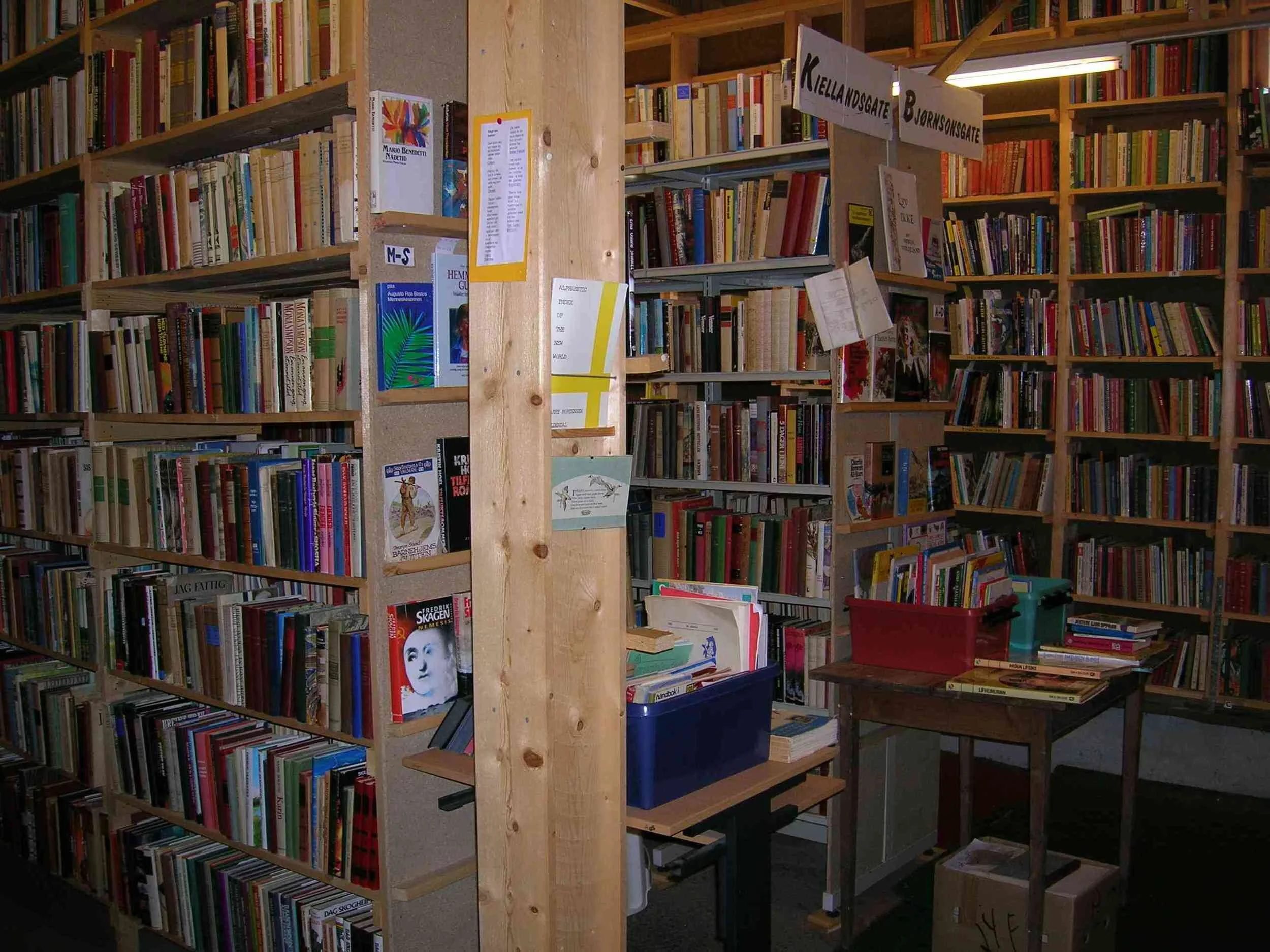
There will be a book market, a free concert with Olav Stedje, book fun for young and old, authors, food and drink. Simply a wildly beautiful summer night by the fjord.
Read more on Bokbyen's website.
Welcome to Fjærland and Boknatti!

Mammoths are coming to the Norwegian Glacier Museum!
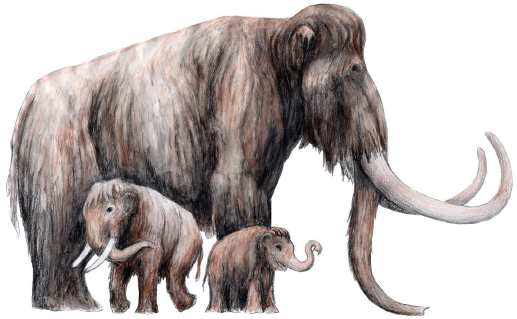
The Ice Age animals are finally coming home to the Norwegian Glacier Museum. This is part of an educational playground outside the museum. There will be speakers, fun entertainment and exciting surprises at the opening.
The woolly mammoth was a species of mammoth that lived in the northernmost regions of Eurasia and North America from about 5 million years ago until the end of the last ice age about 11,000 years ago. Thanks to the discovery of frozen and dried carcasses, this is the prehistoric animal species that is best known, both in terms of appearance and lifestyle. In addition to whole carcasses, large quantities of entire skeletons, tusks, teeth, stomach contents and feces have been found. Several finds have also been made in Norway, almost all in Gudbrandsdalen.
The extinction of the woolly mammoth was due to the loss of their habitat at the same time as modern humans encroached on the remaining areas in search of prey. As large animals with slow reproduction, mammoths were vulnerable to hunting pressure and became extinct in both Eurasia and North America at the end of the last ice age.