

The discovery of the ice age
In 2023, it will be 200 years since the "Ice Age" was discovered, or rather, the theory of ice ages.
Professor Jens Esmark was on a tour of the country and brought two students with him. On one part of the trip, which went from Stryn in the west to Skjåk in the east, they had to pass through a high mountain area with glaciers and, not least, traces of the glaciers in the form of moraines and drift blocks.
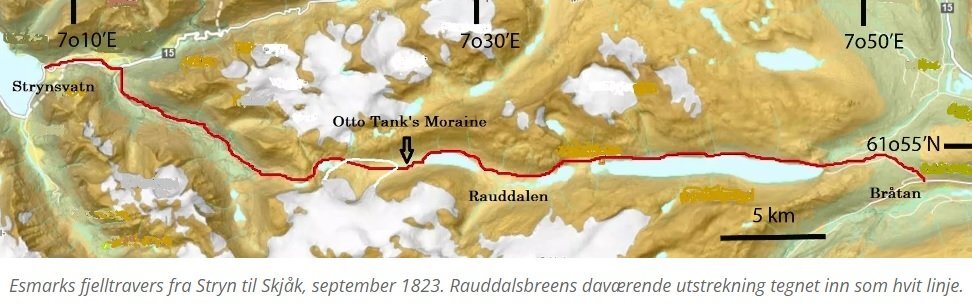
Figure taken from Geo365.no and Professor Geir Hestmark's case about "The Discovery of the Ice Age".
And it was at the border between west and east that the "eureka wink" struck; it must have been the glacier that deposited soil and rock up here in the mountains, as they had also observed in lower-lying areas by the fjord in Western Norway (more precisely, Forsand in Rogaland). Down at sea level lies the "Esmark moraine", which is a deposit from the "Istida's" last advance about 10,000 years ago.
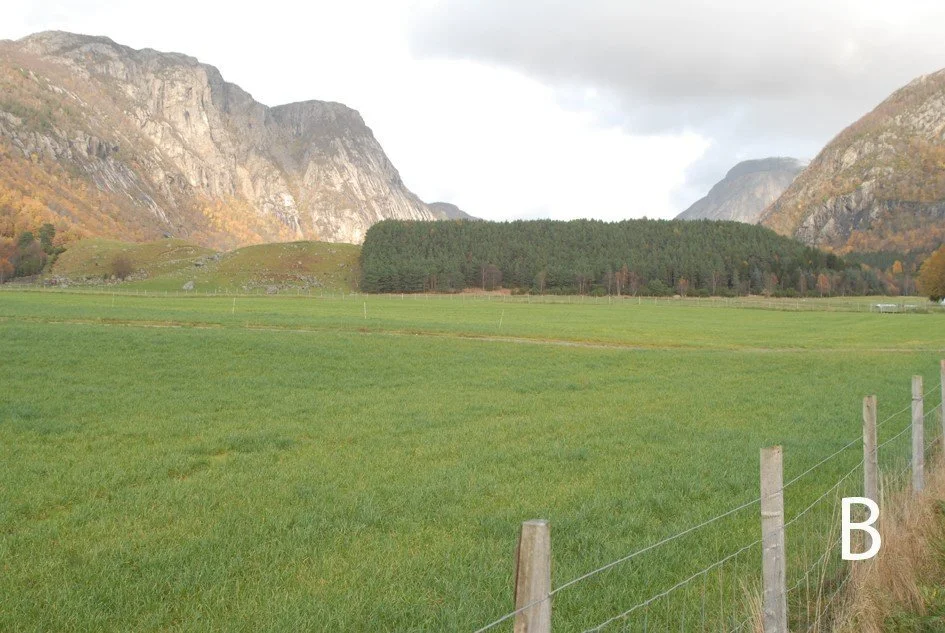
The Esmark moraine in 2008. Photo: Geir Hestmark (photo taken from Geo365.no )
You can also read more about this fantastic story at Geo365.no .
Annual Report 2021
The 2021 season was special for the Norwegian Glacier Museum due to Covid-19. This resulted in the lowest number of visitors ever. It was nevertheless pleasing to see that many Norwegians visited us, and that we received more foreign visitors at the end of the summer. In the attached annual report you can read about big and small events in 2021.

The climate calculator of Vestlandsforsking
Do you know what a climate calculator is? Are you interested in your and your household's environmental impact in terms of energy use, greenhouse gas emissions and carbon footprint? Vestlandsforsking has created a calculator for you!
Veslandsforsking's simple, but ingenious, climate calculator is great for calculating the environmental impact of a household.
This calculator is not meant to "arrest" anyone, but to encourage people to make more environmentally friendly choices in the future.
Try it and find out how you fare, and seek knowledge - preferably from us - or others, such as Vestlandsforsking, to become "climate-smarter" in the future.
There are MANY different versions of climate calculators. Some cost money, some are free. Some are very simple, and some are insanely complicated. We want to recommend Vestlandsforsking's climate calculator because it is made in the "neighboring" Sogndal (the museum is in Fjærland, as you may know) and because it is relatively "short-traveled" (although short-traveled may be a bit strange in an internet context, but still).
Try it! :)

30th anniversary Norwegian Glacier Museum
Welcome to the celebration of our 30th anniversary in Fjærland at 4:00 PM on May 22. The celebration is open to everyone.
We are incredibly pleased that HM Queen Sonja has agreed to join our celebration. She laid the foundation stone of the museum on October 11, 1990 and opened the museum on May 31, 1991. HM The Queen is also an honorary member of the museum.
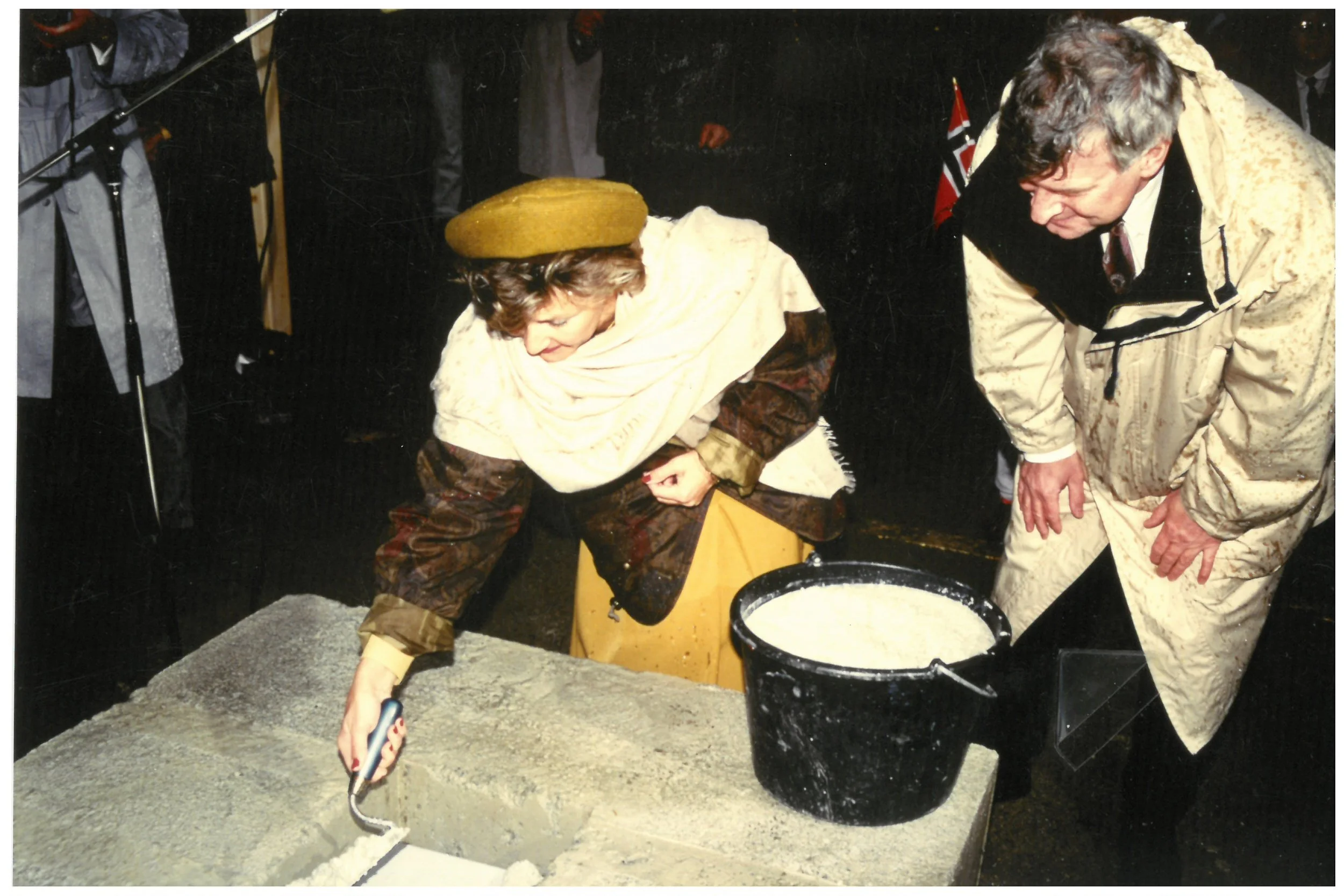
On the left, (then) Crown Princess Sonja, and on the right, chairman of the museum, Eilert Stang Lund.
The anniversary will be marked outside in front of the Glacier Museum.
There will be free admission to the museum after the official commemoration.
We hope to see you on this day - please bring Norwegian flags.
Regular opening hours on this day are 10:00 - 15:00.
Program 22.05.22 Norwegian Glacier Museum 30th anniversary and film screening
Part 1 at the entrance to the Glacier Museum:
16:00: Arrival of HM The Queen at the Norwegian Glacier Museum. She will be welcomed by the acting State Administrator of Vestland, Mayor of Sogndal, Chief of Police of Vestland, Chairman of the Board Atle Nesje and Director Anne Mundal Skjelten.
Flower distribution by Knut Juklestad Mundal, 5 years old, from Fjærland.
The county goes across the lawn to the event part 2
Part 2 outside the museum: Here there is an opportunity for anyone who wants to join in on the program:
Welcome, by Chairman Atle Nesje
Chair, Director Anne Mundal Skjelten
Song, by Fjærland Children's and Youth Choir
The story of the Glacier Museum, by Olav Orheim
Poetry reading, by Eivind Ødegård
Helsingar to the Glacier Museum
Song, by Fjærland Chamber Choir
Invited guests and accredited press move into the cinema hall after the program.
Part 3 in the cinema:
Arrival of HM The Queen with her entourage, when everyone is in place in the hall.
Chair, Director Anne Mundal Skjelten
Conversation led by Stian Sjursen Takle, with Falkeblikk, Former Director John Brekke, the Horsengruppen and Veri film, about the film process
Showing of "behind the scenes"
Viewing of new panoramic film
Closing, by Chairman Atle Nesje
6:00 PM: HM The Queen bids farewell to the Glacier Museum
Cake and mingling at the museum, and the opportunity to see the rest of the museum after the official program.
Free admission and cake for all visitors to the museum after part 2 outside.

Roar for climate and glaciers
In May, you can roar in the power of our people at the Glacier Museum in Fjærland.
The Climate Roar is about to create the longest celebration for climate and nature in Norwegian history. Throughout May you can experience and contribute to the roar with us. Here, the artwork Brølofonen is on display.
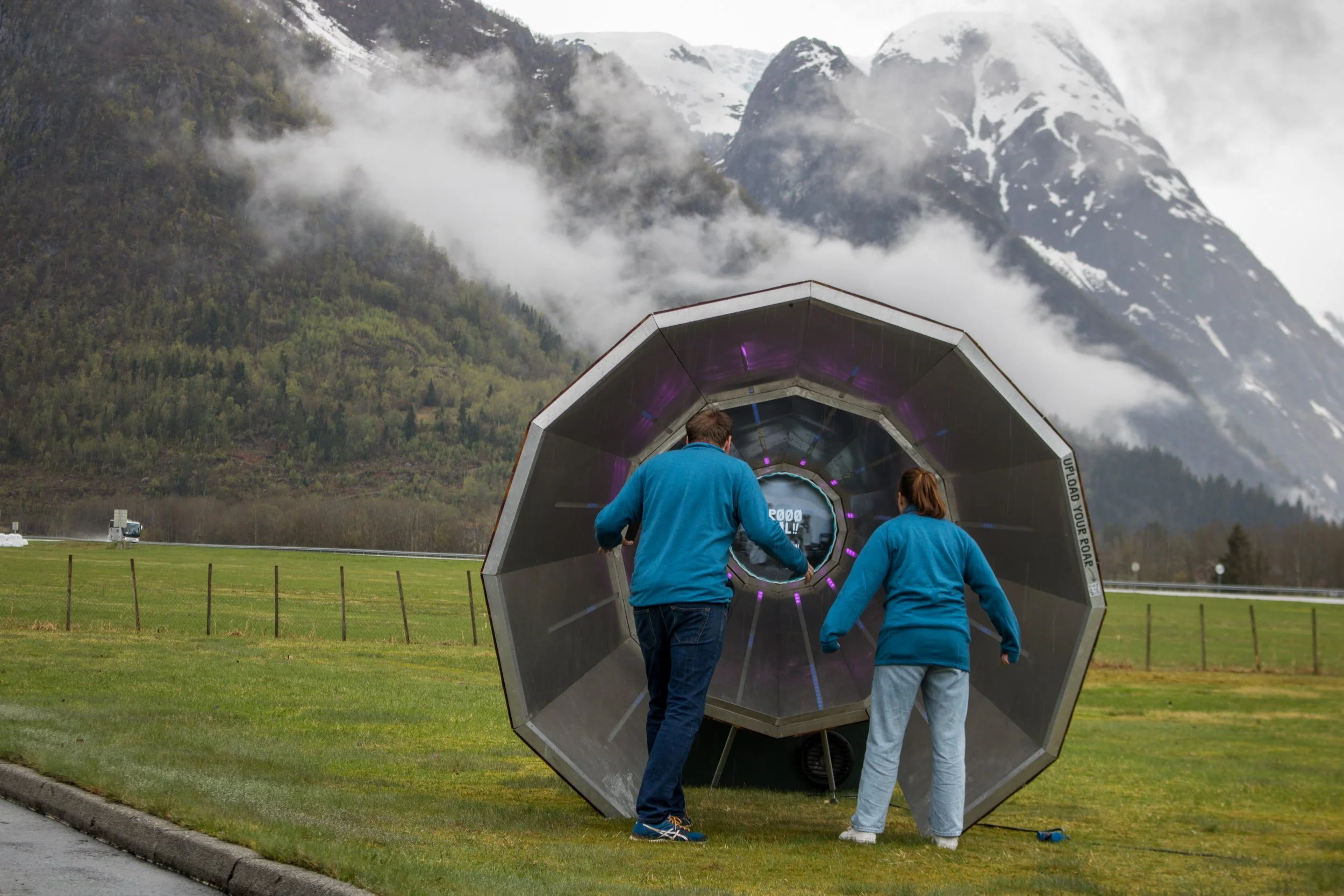
Magnar and Delphine, who work at the Norwegian Glacier Museum, advocate for the climate - and the glaciers.
Fjærland and the areas near Jostedalsbreen have long been known for their steep glaciers that rumble, crash and roar, while the ice is in constant motion. The roar of the glaciers has subsided in modern times, they are shrinking and making less noise. This is what we want to focus on! With a roar for the climate, we may be able to help the glaciers return to their glorious days. Come and roar at the Norwegian Glacier Museum!
It will roar continuously for four years - throughout an entire parliamentary term - to gather and visualize broad public engagement on climate and nature issues. Right now you can experience the roar here in Fjærland, as part of the Norway Tour.
“We who roar do not necessarily have the same answer to what should be prioritized in the climate and nature fight. But by raising our voices together, we put the issue at the top of the agenda. By roaring, we cheer on brave politicians and businesses who are working to turn the tide. By voting in the roar, we create community and give each other the courage to make lifestyle changes,” says Lene Bonesmo Solberg, chairwoman of the Klimabrølet Association.
“It is quite demanding to roar continuously for four years. That is why we have built the Brølofonen. In this interactive artwork, where Røyksopp, among others, has contributed music, you can both experience the effect of roaring on the body, and contribute to unity and power in the climate fight. Record your own roar - whether it is a cheering roar, a thunderclap or a roar expressed through sign language. The sum of motivations and expressions shows the breadth of popular commitment to the most important cause of all time.”
We at the Norwegian Glacier Museum are proud to contribute to carrying the roar across the country. It is important that we keep the climate debate alive. If you can't make the trip, we encourage you to upload your roar to Klimabrølet . Your roar will then be played back through the Brølofonen, and you will become part of the longest roar of all time, for the most important cause of our time.
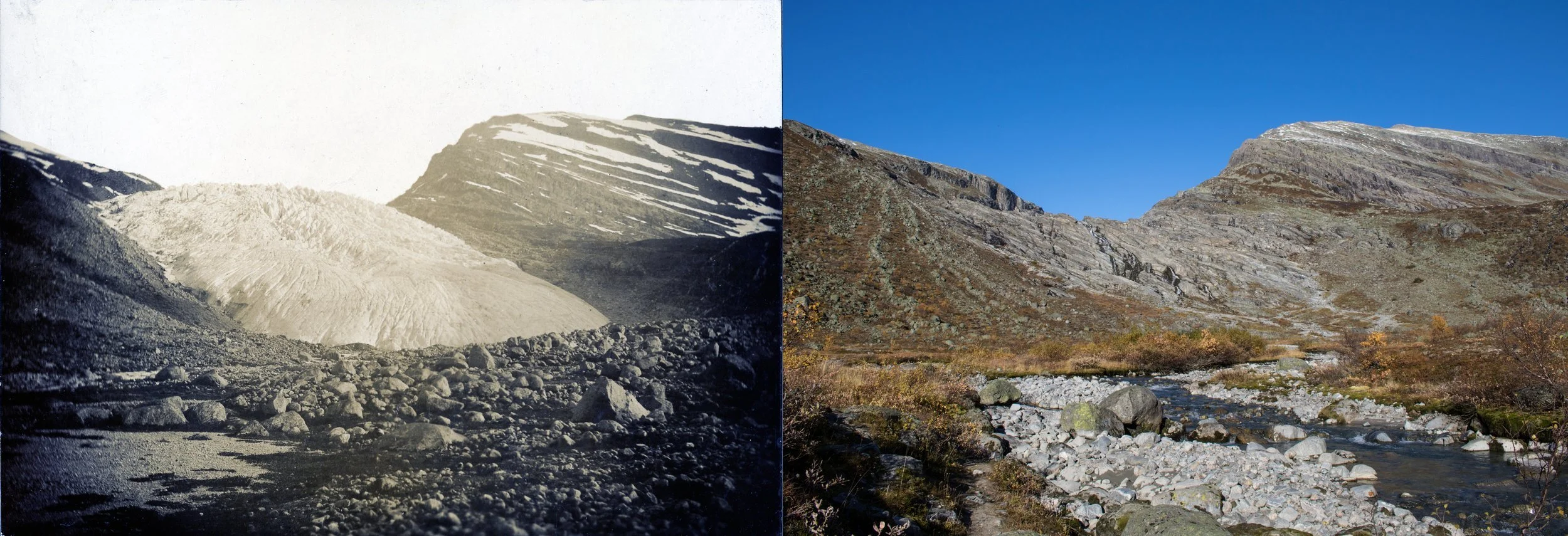
Haugabreen glacier in the 1930s (NGU) and what the landscape is like today (Pål Hage Kielland).
Contact:
Spokesperson Even Nord Rydningen
Phone: 473 93 379
Email: even.nord@gmail.com

The Norwegian Glacier Museum opens its doors with a new exhibition this season
Have you heard about the plane that crashed on Bøyabreen in 1972? We are opening a new exhibition about the discovery of the wreckage.
The museum presents “The Plane in Bøyabreen - 49 Years in the Ice”. This exhibition tells the story of the plane and the discovery of the wreckage that was made in 2021.
In addition, we will be showing the spectacular panoramic film about Jostedalsbreen National Park, and you shouldn't miss our interactive and holistic climate exhibition.
Opening hours are 10:00 - 16:00 every day in April and May. Throughout the summer (June, July, August) we are open every day 09:00 - 19:00. In September and October the opening hours are the same as in April and May. For visits outside of regular opening hours, visits for groups and on special occasions are possible. Please ask us!
Welcome to us and Fjærland in 2022 :)
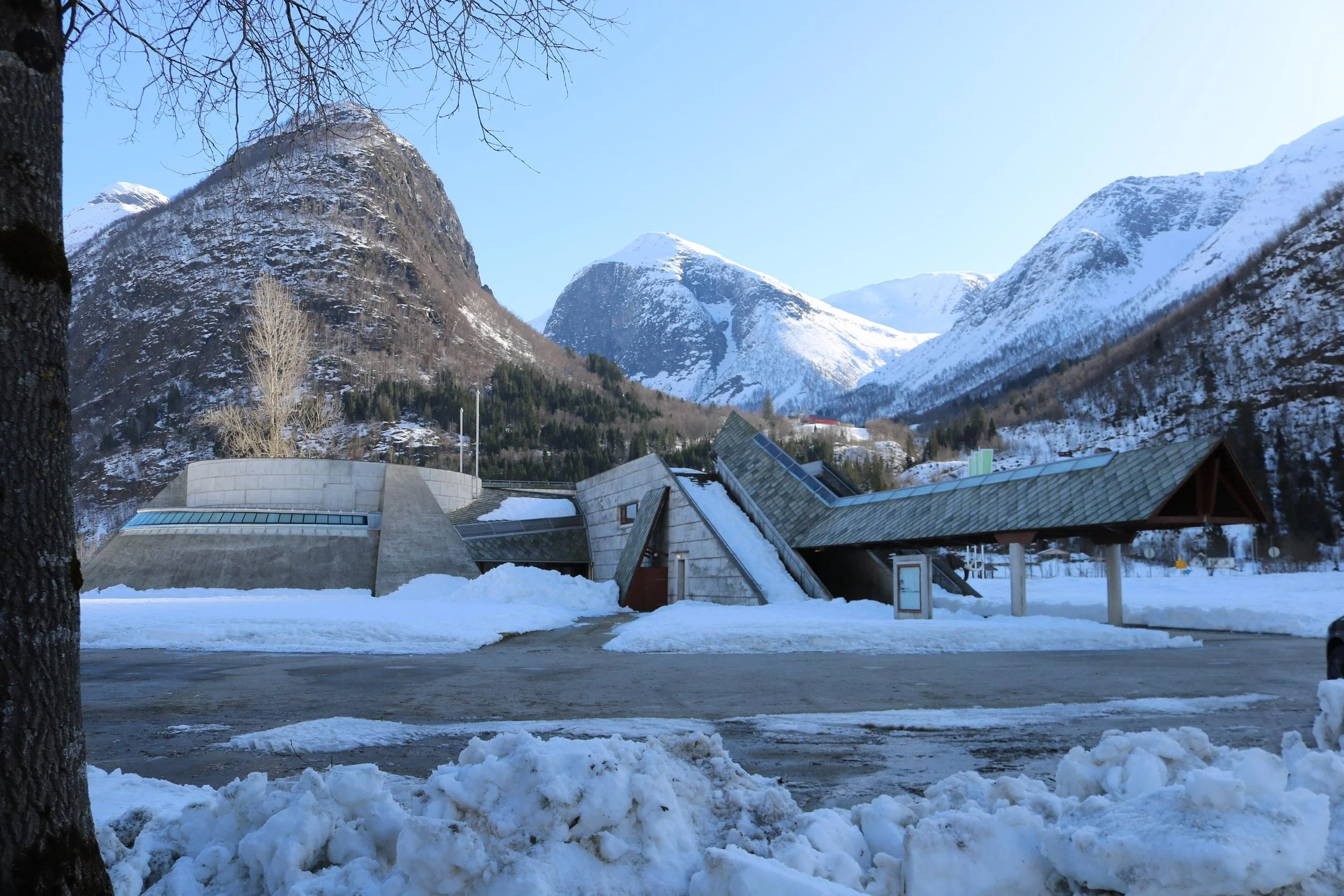
This is what it looks like at the Norwegian Glacier Museum at 10 a.m. on April 1, 2022.

Lifetime membership at the Norwegian Glacier Museum
Did you know that the Norwegian Glacier Museum has lifetime membership?
In recent years we have had a pleasing increase in the number of lifetime memberships. For 900,- NOK you can visit the museum as much as you want during the season between April 1 and November 1, for the rest of your life.
You will also receive an annual report by post or email every year. When ordering, you can specify in which form you would like the annual report to be sent.
You will also receive a personal ID card that you can show at reception to gain entry to the museum.
Welcome!
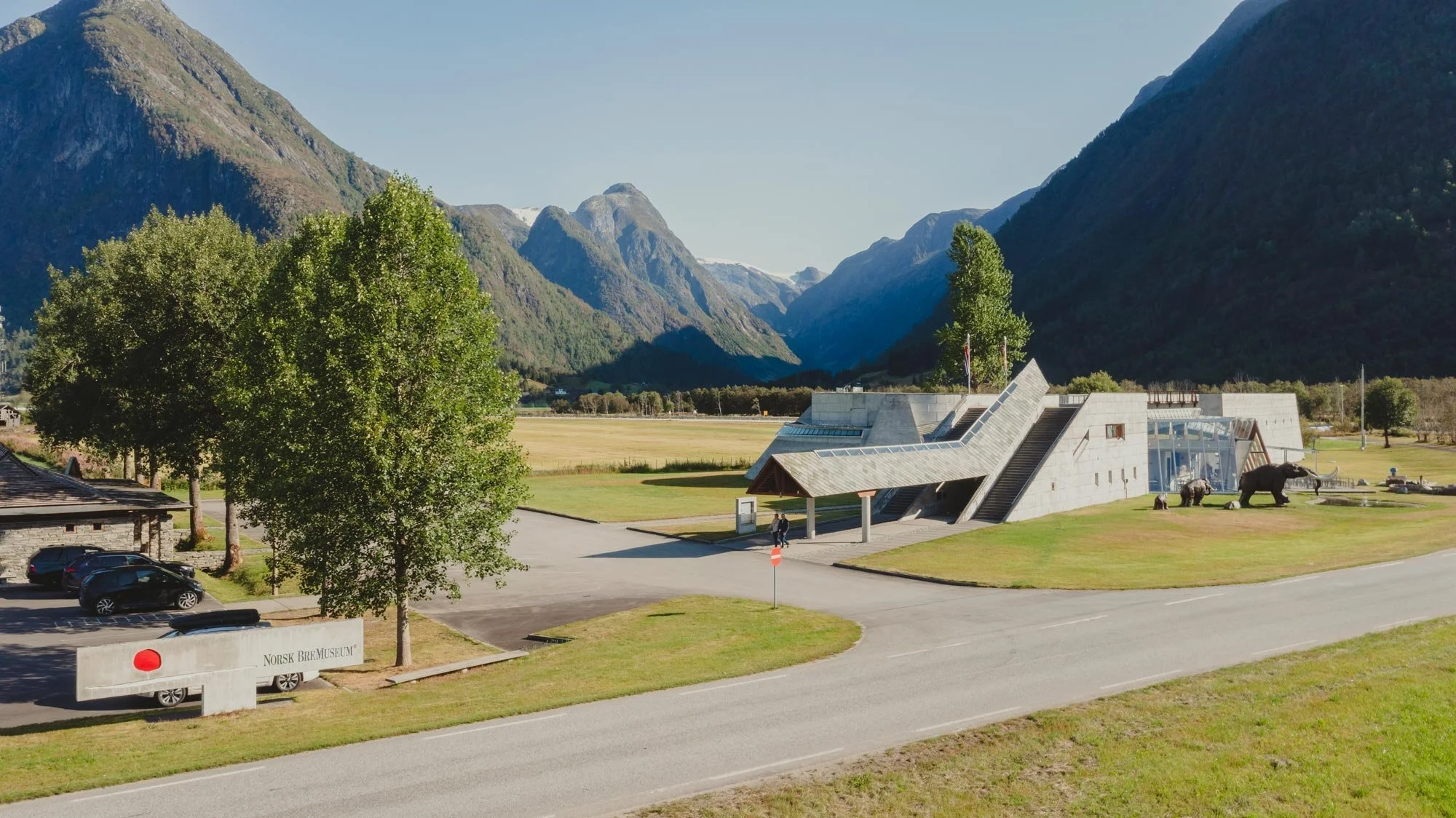
Norwegian Glacier Museum. Photo: Augeglikk Studio.

Front position measurements 2021
This year's measurements showed that the glaciers were retreating in 2021 as well.
Vetle Supphellebreen in Fjærland retreated 2 meters. Since 2011, the glacier has decreased by 32 meters. The glacier lies in an area from 794 meters above sea level at the front, to just over 1700 meters above sea level in altitude. This is a slightly lesser-known glacier, compared to its “big brother” Store Supphellebreen, which lies west of the peaks that separate the two from each other. Vetle Supphellebreen lies east of the mountain massif that belongs to Supphellenipa and Myrhaugsnipa. Supphellenipa can be glimpsed as a sharp spike slightly to the left and far in the back of the picture.
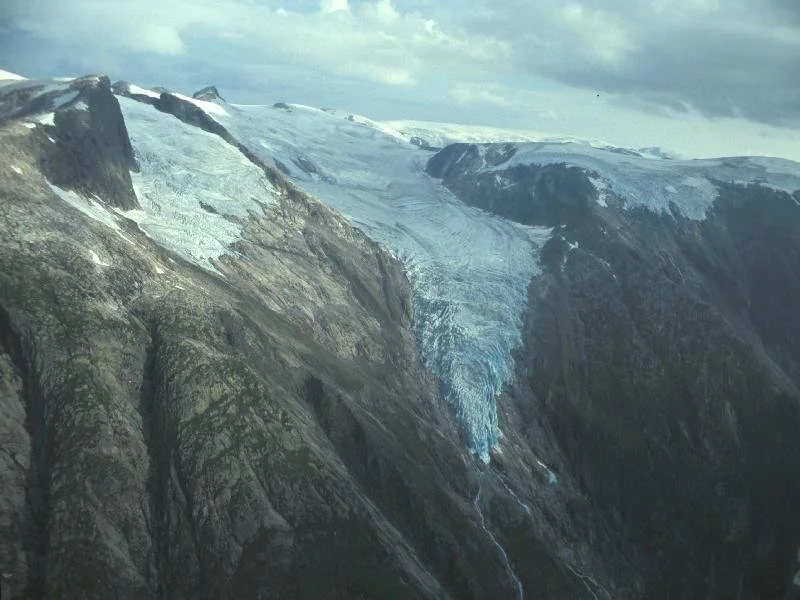
Vetle Supphellebreen. Photo: Hallgeir Elvehøy (NVE) August 11, 2011.
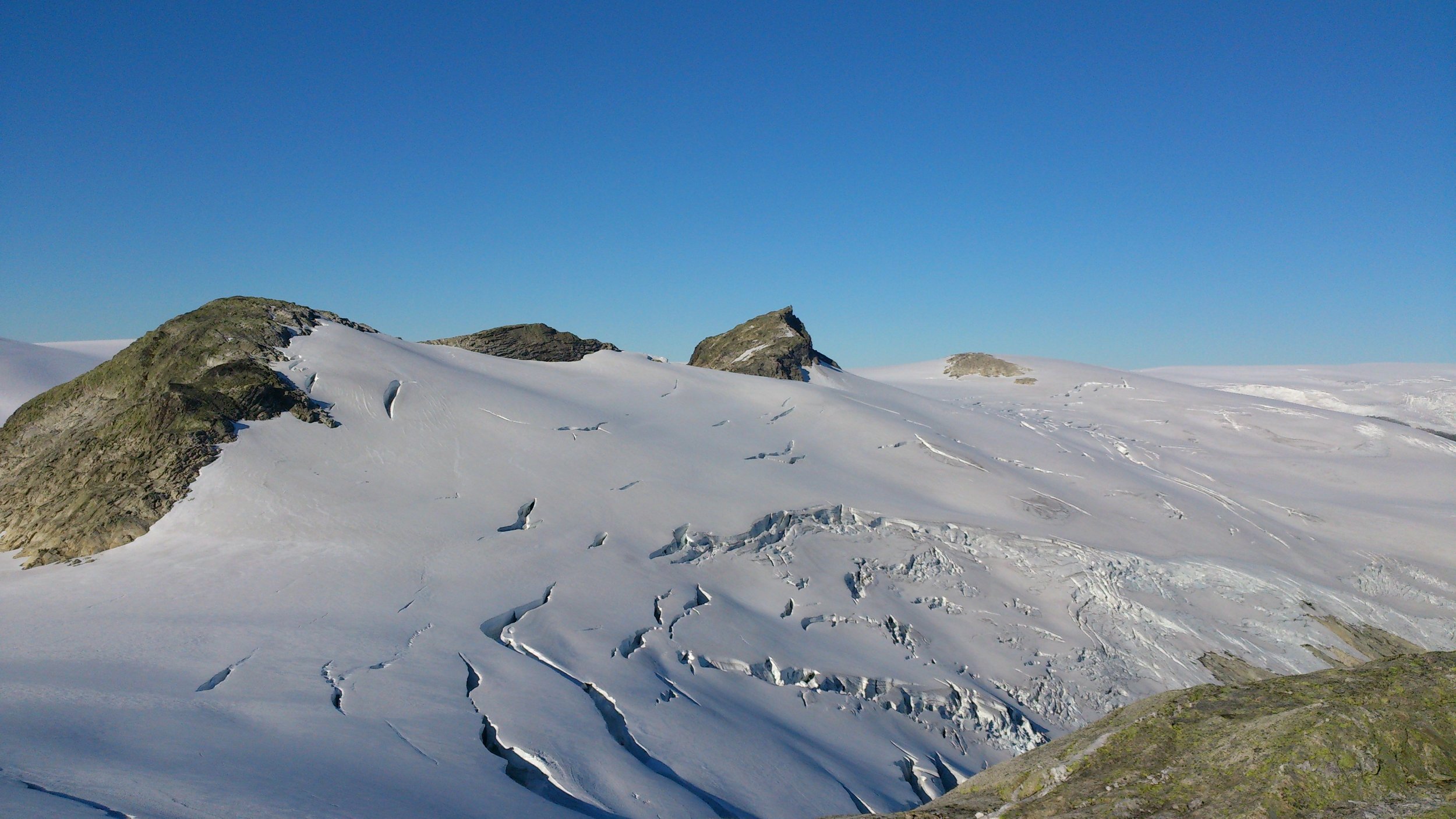
Supphellenipa sticks up like a sharp nunatak through the glacier. Photo: Pål Hage Kielland (Norwegian Glacier Museum), October 14, 2013.
The other glacier we are measuring, Haugabreen, has decreased by 5 meters since last year and a total of 89 meters since 2013 when we started the measurements. The measurements of Haugabreen were reported on NRK , both online and in Dagsrevyen, on October 8th of this year.
Haugabreen is located in Jølster, where the front is just under 900 meters above sea level while the highest point of the glacier is almost 1800 meters above sea level. Haugabreen is an outlet from Norway's 8th largest glacier, namely Myklebustbreen.
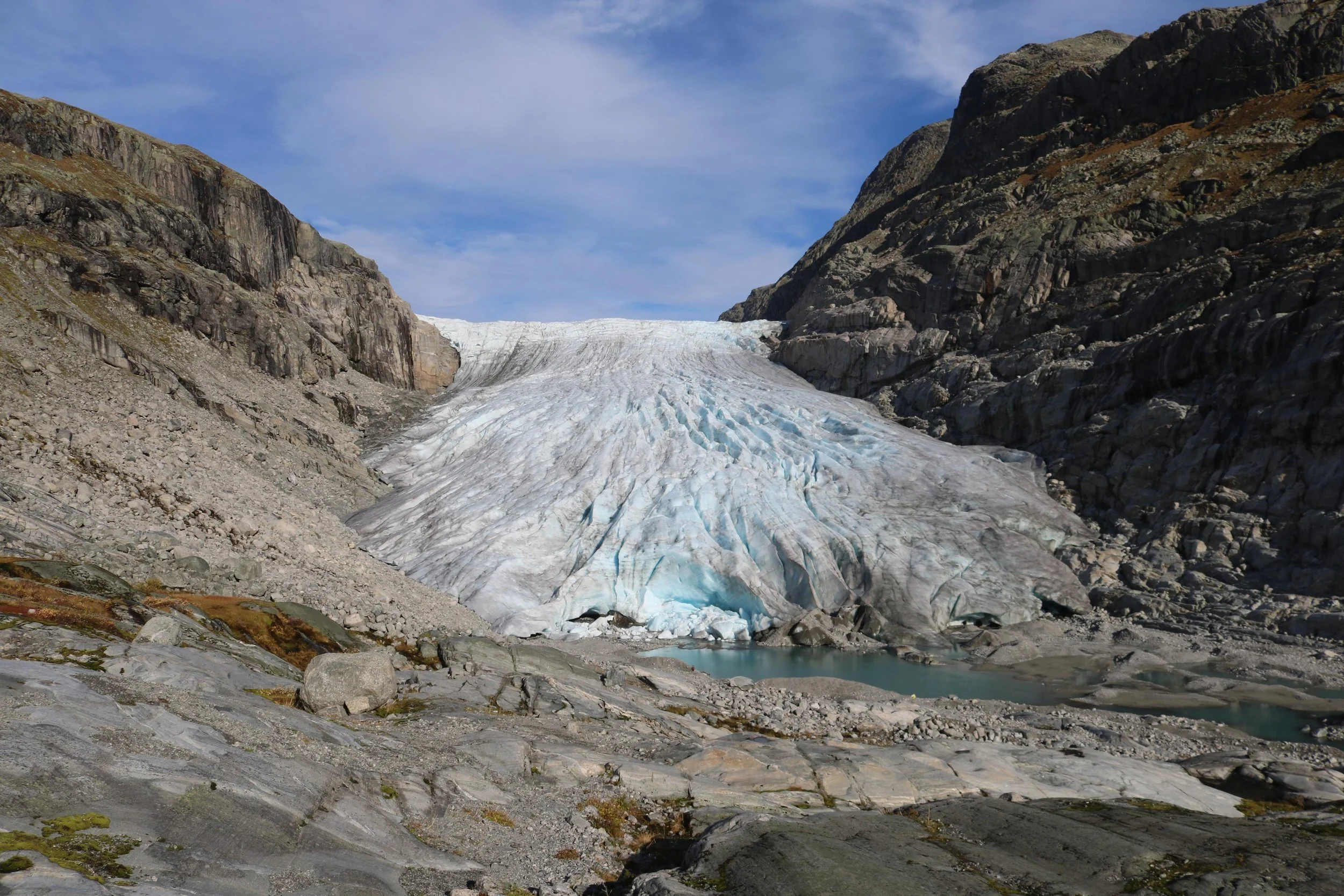
Haugabreen. Photo: Pål Hage Kielland (Norwegian Glacier Museum) October 7, 2021.
The trend of glacier melting continues, which is not surprising with a warming climate. Other well-known glaciers in Jostedalsbreen National Park that have melted again in 2021 include Austerdalsbreen in Veitastrond (-130 meters), Nigardsbreen in Jostedalen (-39 meters) and Brenndalsbreen in Stryn (-15 meters).
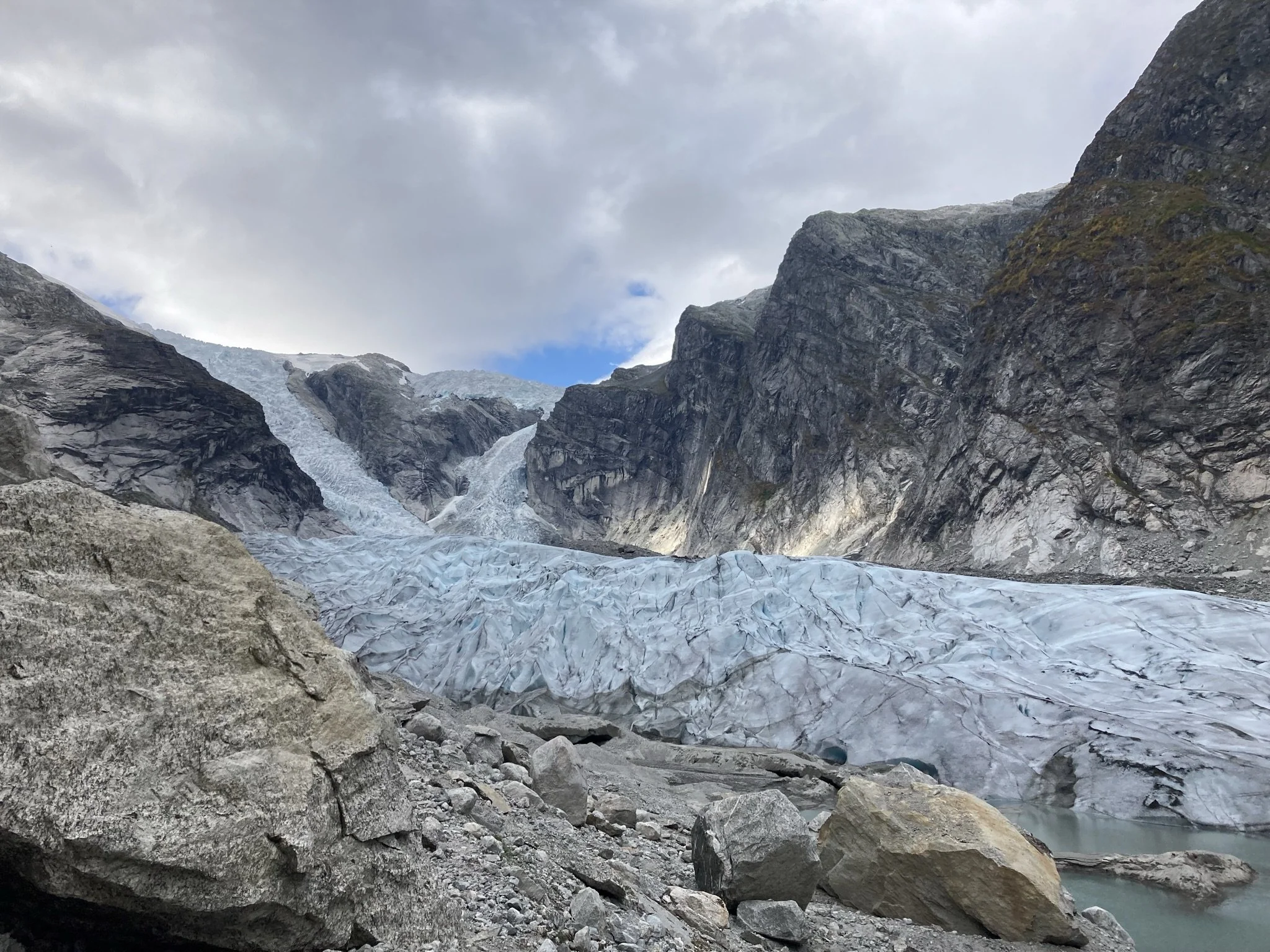
Austerdalsbreen. Photo: Pål Hage Kielland (Norwegian Glacier Museum) September 5, 2021.
The consequences of the melting glacier, for both nature and humans, are being mapped through the research project JOSTICE , of which the Norwegian Glacier Museum is a part. Our contribution, together with other visitor centers such as Jostedalsbreen National Park Center, the Breheim Center and ViteMeir, is to disseminate the knowledge from the project.

Norwegian Glacier Museum this summer
The Norwegian Glacier Museum is open every day from 9 am to 7 pm this summer. Here you can watch the fantastic panoramic film about Jostedalsbreen National Park, experiment with real glacier ice from Supphellebreen and experience the Earth's climate history through an interactive evolutionary walk.
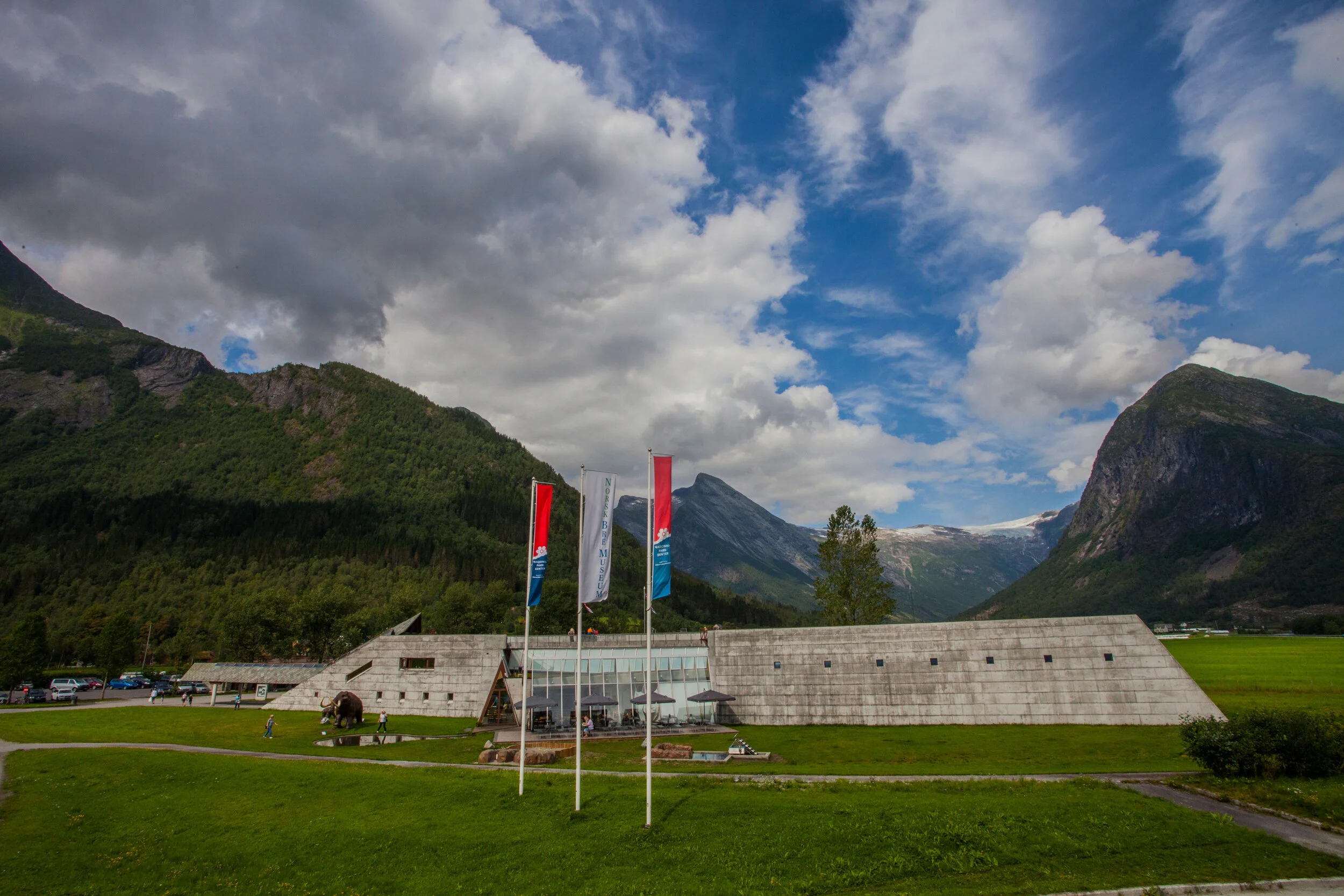
Norwegian Glacier Museum in Fjærland.
The museum also has its own café with a new design and a museum shop that focuses on sustainable solutions, among other things. You are welcome to enjoy your food in our outdoor seating area at the front of the museum. We also have newly renovated toilet facilities in 2021, free parking and an electric car charging station (Operator “More”).
Outside we have the educational playground that is specially designed for children and young people, with mammoths and models that explain what a moraine is or what sea level rise is.
In the glacier and fjord area there is also a lot to do. Such as mountain hikes that you can do yourself, guiding on the glacier , kayaking on the fjord , a floating sauna and food service at Bøyabreen at Brævasshytta and in Mundal. There are also great places to stay both in Supphelledalen at Rødseter , Bøyum Camping right by the museum, Fjærland Hytter across the fjord and in Mundal (Fjærland center) with Fjærland Fjordstove Hotel . In Mundal there is also Den Norske Bokbyen , Fjærland Guiding , the Cafe in Mundal, the Jokerbutiken and the guest harbor for small boats.
And of course, remember to pay the glaciers a visit! Like in the picture below, Bøyabreen.
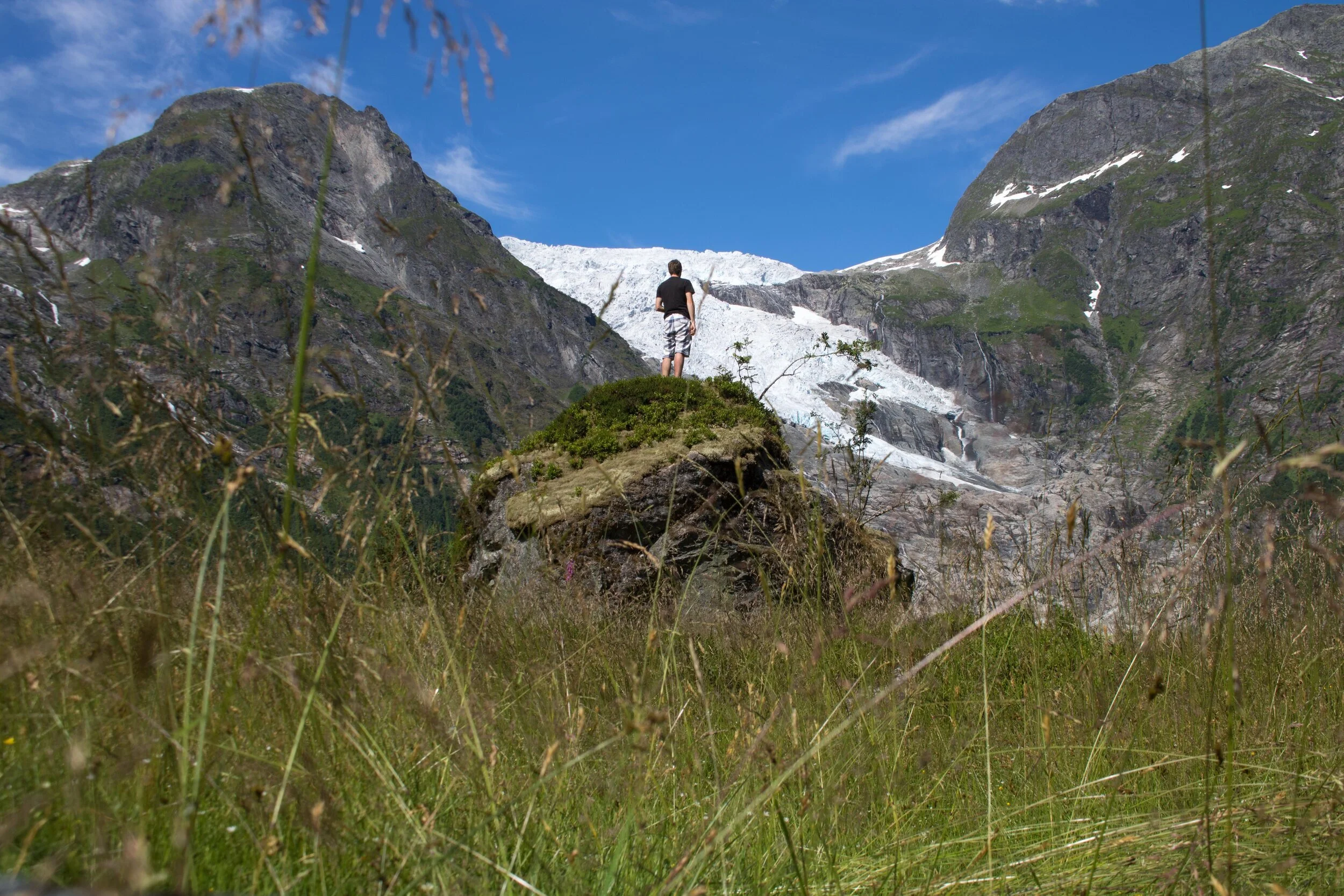
The Bøya glacier in Fjærland.
Our museum hosts are helpful in recommending activities and other things to do in Fjærland and the Sognefjord area. Check out the Fjord Map!
We hope Fjærland can entice you on a summer day in 2021. Welcome to the Norwegian Glacier Museum and Fjærland .

The glacier map is 30 years old.
The brochure “Glacier Map” has served as a marketing tool for guiding opportunities on several of the branches of Jostedalsbreen, and on other glaciers in the National Park. Here you will find information about regular guided tours, about different glacier guide groups, about safe travel on the glacier, about Jostedalsbreen National Park, conservation values and visitor centers, and where you can find tourist information in the area around the largest glacier on the European mainland. This year marks the 30th season that the Glacier Map has been published.
There are many great opportunities for glacier guiding in Jostedalsbreen National Park. Among others on Austerdalsbreen where Norgesguidene has regular tours in 2021. Photo: Norwegian Glacier Museum.
In 1992, the Norwegian Glacier Museum took the initiative for a pilot project in a joint presentation of offers for glacier guidance around Jostedalsbreen. At that time, the pilot project was a collaboration between the Norwegian Tourist Association/Bregruppa, Fjærland Sports Club, Indre Sunnfjord Turlag, Jostedalen Breførarlag, the Norwegian Glacier Museum, Sogn og Fjordane Turlag/Fjellsportgruppa, Stryn Fjell- og Breførarlag, Anders Øygard/Flatbrehytta, Sogn og Fjordane Tourism Council and the management of Jostedalsbreen National Park. The Norwegian Glacier Museum has always been the responsible publisher of the Glacier Map. Ellen Jepson has been responsible for graphic design all these years.
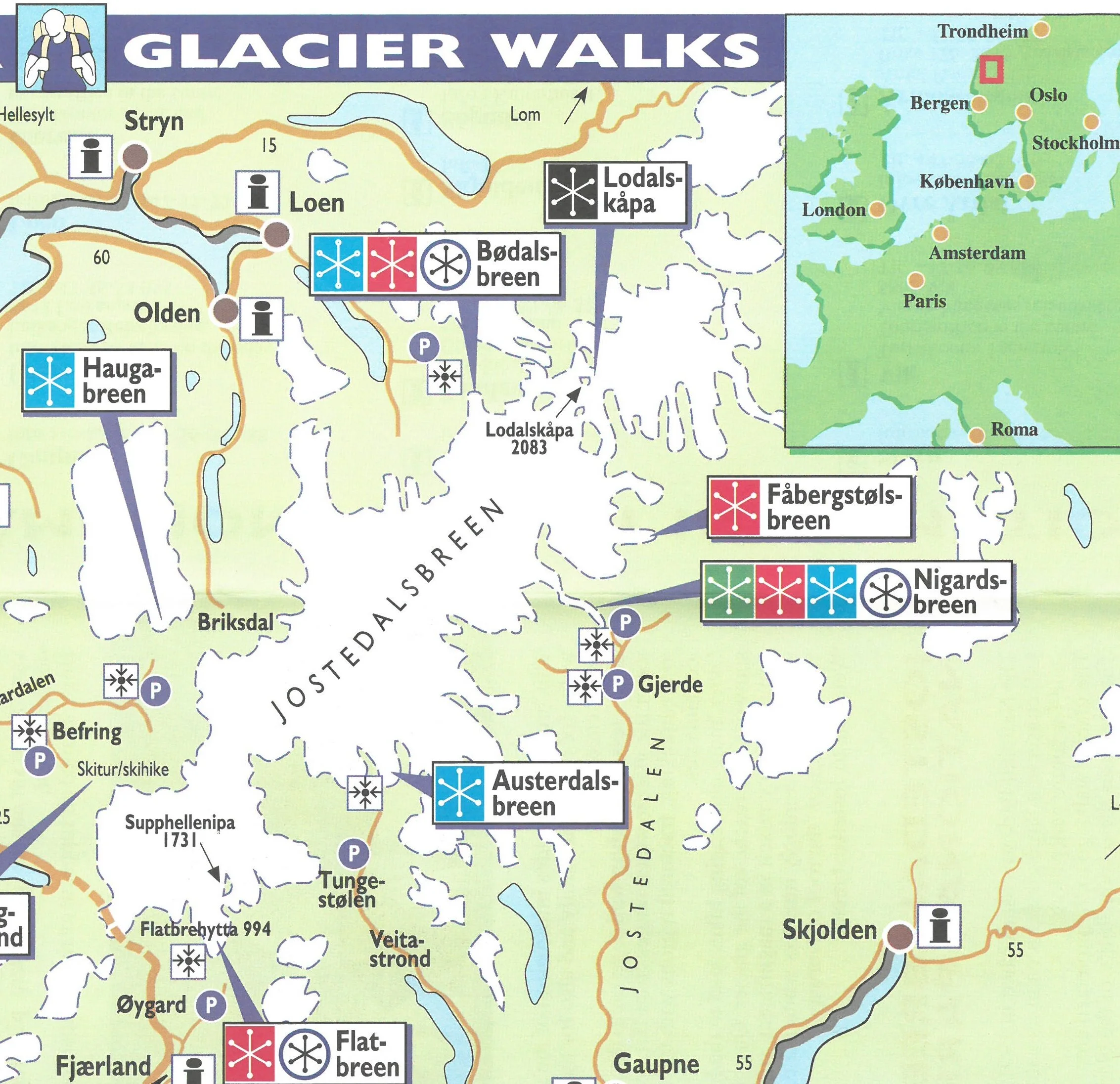
Excerpt from the Glacier Map in 1992.
Today, several of the same players are involved in the collaboration, but many others have also joined. The three visitor centers for Jostedalsbreen National Park; Norwegian Glacier Museum in Fjærland, Breheimsenteret in Jostedalen and Jostedalsbreen National Park Center in Oppstryn. The destination companies Visit Sognefjord, Visit Nordfjord and Sunnfjord Utvikling are also involved. Among the glacier guide associations we have Bre og Fjell, Briksdal Adventure, Fjord Active, Fjærland Guiding, Ice Troll, Jostedalen Breførarlag and Norgesguidene. The administration of Jostedalsbreen National Park is the contributor that provides the most financial support.
There has been and continues to be good cooperation and interest in continuing the publication of this brochure, which will be distributed in the core area around Jostedalsbreen. We hope that there will be a good season for safe glacier tours in 2021 and we thank everyone who has been involved in this effort for 30 years.

Norwegian Glacier Museum opens April 16th
Due to the infection situation related to corona/covid-19, the Norwegian Glacier Museum postponed the start of the season to 16 April.
The museum normally opens its doors to guests on April 1st each year. In line with local and national infection control measures, we have chosen to postpone the opening until April 16th. New assessments related to the infection situation will be made along the way.
Take care of each other and follow infection control recommendations and rules.
Meet us at the Norwegian Glacier Museum in Fjærland

Results from glacier measurements in 2020
The Norwegian Glacier Museum & Ulltveit-Moe Center for Climate Science in Fjærland annually measures front changes on some local glaciers.
As part of a network with other glacier enthusiasts, we help NVE (Norwegian Water Resources and Energy Directorate) monitor several glaciers. Front changes are measured on 30 to 40 glaciers around the country.
The glaciers for which the Norwegian Glacier Museum is responsible are Vetle Supphellebreen in Fjærland and Haugabreen in Jølster. The front of Vetle Supphellebreen decreased by 6 meters compared to the previous year and has melted a total of 30 meters since 2011. At Haugabreen, the front retreated 8 meters, which means a melting of 84 meters since 2013.
Haugabreen glacier in 2015 and 2020. The images show how more mountains are emerging around the glacier, especially the area marked with red circles in each image. In addition, a small lake is emerging in front of the glacier.
In the fall of 2020, NVE reported that there was a positive mass balance on several glaciers. The term mass balance says something about how much snow the glacier receives each year, versus how much ice and snow melts away. This can be compared to an accounting system, where you have income and expenses. The year 2020 was therefore a good year for the glaciers' accounts. This means that a lot of snow fell during the accumulation season, which usually lasts from November to April. The temperatures during the melting season, which typically lasts from May to October, in 2020 were unable to sufficiently consume the snow and ice on many of the glaciers to create a deficit.
If we look at the changes in glaciers over time, the retreat of the fronts shows that there is not enough snow to cover the deficit. This is the long-term trend for Norwegian glaciers in the 21st century.
The development of the front position of five selected glacier arms from Jostedalsbreen in the period 1899 - 2020. Nigardsbreen in Jostedalen, for example, has retreated almost 3 kilometers in about 120 years.

The Norwegian Glacier Museum opens for the season!
We are pleased to announce that we are open for the season. The museum is open every day 10 - 17.
After a time of uncertainty this spring, we can now finally open our doors. Normally we are open from April 1st, but the situation with Covid-19/Coronavirus made it difficult.
Now we are finally back on track and can welcome guests as before.
WELCOME TO US :)
NB: we have developed internal guidelines for infection control and follow the advice of the Norwegian authorities. We encourage everyone to be considerate of each other, both towards other guests and staff, and to respect infection control measures. Remember to keep your distance, wash your hands, etc.
We can report that there are also lots of other things in Fjærland that are open, such as Bokbyen, guiding, hotel and camping. See the Facebook page of “Fjærland” or www.fjaerland.org for things to do.

A Christmas greeting
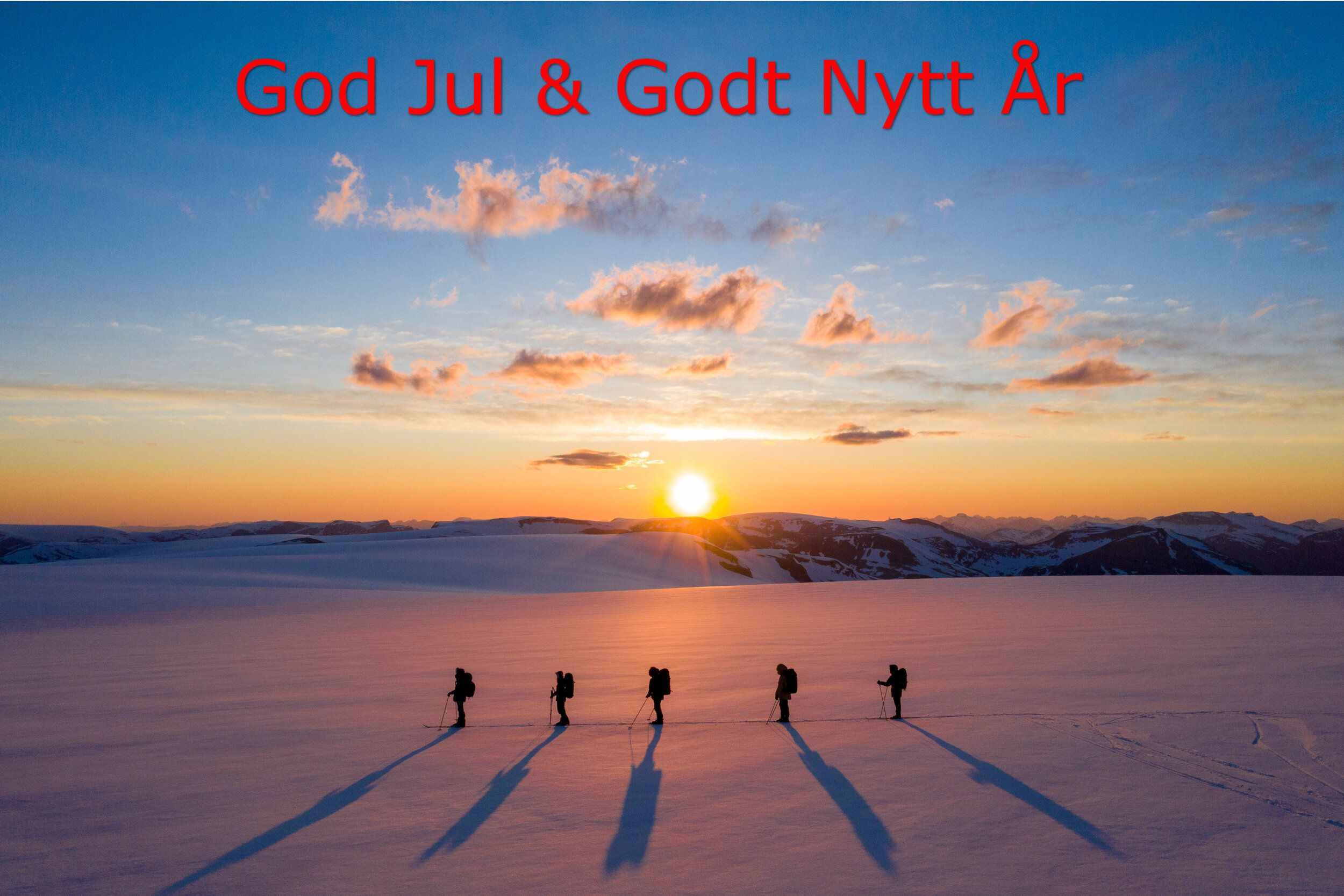
Photo: Verimedia. From the behind-the-scenes footage of the new panoramic film about Jostedalsbreen.
2019 is coming to an end and we are saying goodbye to a year where 78,000 guests came to the museum to learn about glaciers and climate. This was a slight decrease from 2018, but still a solid number of visitors.
The 2010s have been a good decade with an increase in guests and new exhibitions. For us, this decade was topped off with the Sogn og Fjordane Tourism Award for 2019 - the last of its kind before the county becomes part of Vestland. We received the award for, among other things, continuous good work in the market, innovations and being a driver of tourism locally and in the region over several years. In 2019, we were also certified as an Environmental Lighthouse, which was important for us in terms of being a sustainable and environmentally friendly business.
What has happened before should be a motivation for the further efforts and operations of the museum. We are building stone by stone, and the success over almost 30 years has resulted in us presenting our brand new panoramic film about Jostedalsbreen in 2020. We are releasing the fantastic film that Ivo Caprino made for us in the 90s, to make room for new technology and a new real-time image of Jostedalsbreen and the spectacular national park that protects nature. The local film producer Falkeblikk is making the film for us.
In addition to a new film, work awaits on the entrance gate to Fjærland, continuous improvements to the exhibitions and a new director in 2020. Reflections on the old year suddenly transition into the new!
With this, we wish all friends and visitors of the museum a very Merry Christmas and a Happy New Year!
Meet us at the Norwegian Glacier Museum in Fjærland

New director
The board of the Norwegian Glacier Museum has appointed Anne Mundal Skjelten as the new director of the museum.
The Norwegian Glacier Museum is a private foundation established by the Norwegian Polar Institute, NVE, UiO, UiB, Western Norway University of Technology, DNT and the International Glaciological Society. In the 28 years since the museum opened, the center can be said to be one of Norway's greatest museum successes, with an annual average of nearly 65,000 visitors and a continuously good economy. In recent years, the museum has had about 80,000 visitors, and since its opening in 1991, almost 2 million people have visited the museum.
Anne Mundal Skjelten has previously worked as a regional secretary at the insurance company Vital, and as managing director at Sigurd Ziem in Bergen. In 2011, she and her family moved back home to Fjærland and in recent years she has worked both as an advisor in the financial services and as deputy head of the accounting section at NAV in Leikanger.
Anne is 43 years old and grew up in Fjærland with glaciers and tourism as a natural part of life. She started her first summer job at Hotel Mundal at the age of 16, and from 1993 she had summer jobs for seven consecutive years at the Norwegian Glacier Museum and at the tourist information office in Fjærland. She therefore knows both the museum and the village very well.
Anne will take up her new position on March 15, 2020 and will be the 4th director since the museum opened its doors in 1991.

The Norwegian Glacier Museum is an Environmental Lighthouse
This summer we were certified as an Environmental Lighthouse. The goal was to raise awareness in order to contribute to a greener and more sustainable future.
To become certified, we went through a process where we had to satisfy a number of requirements within the working environment, purchasing, transportation, energy use, waste, aesthetics and other environmental aspects. Many of the requirements were things we were already working on as a company, but in retrospect we have integrated more of our operations into the system and we have set ourselves the goal of becoming even better within these areas.
As expected, we received a magnificent visit from Sogndal Municipality represented by Mayor Jarle Aarvoll and Deputy Mayor Laura Kvamme.
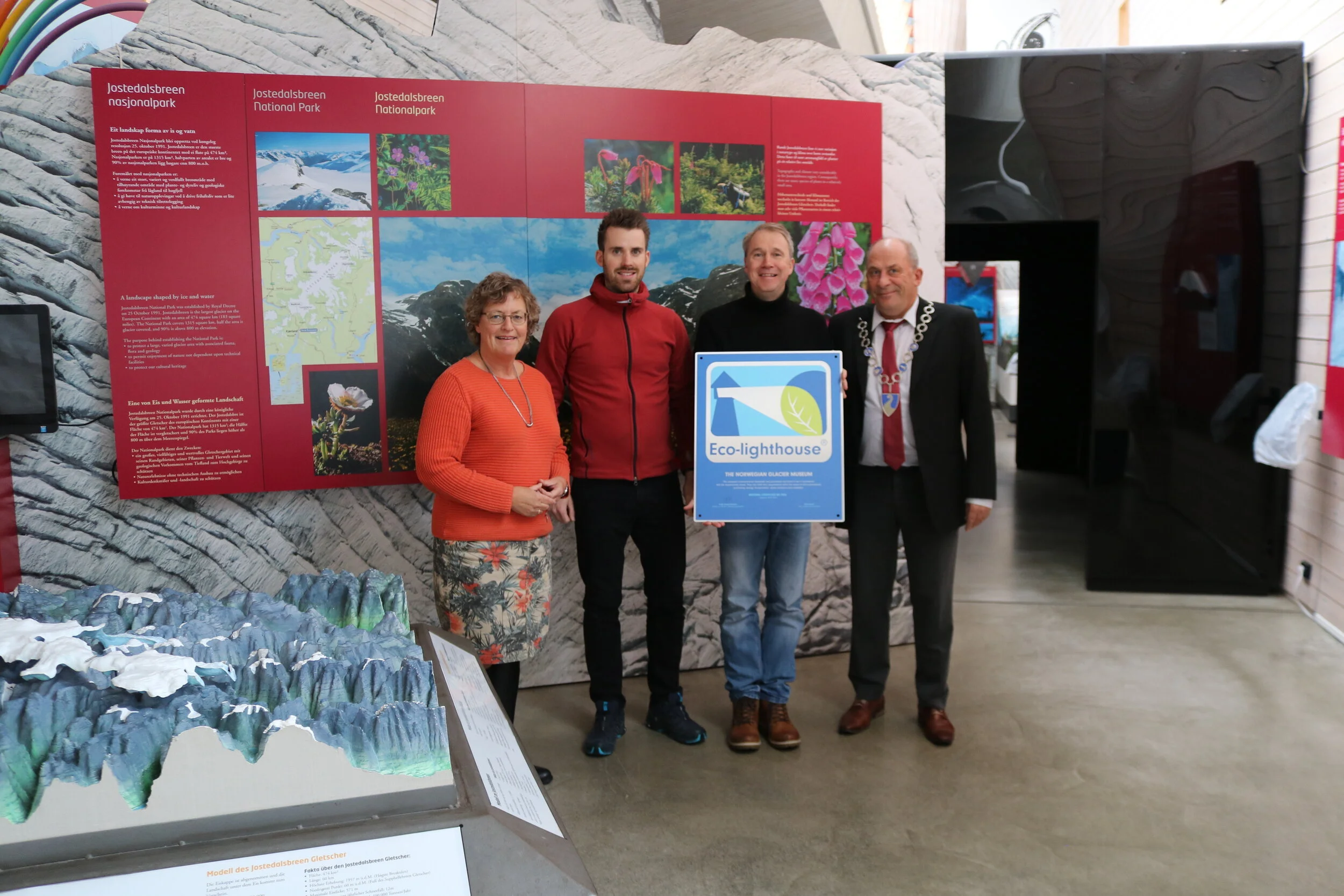
Present at the award ceremony were (from left to right) Laura Kvamme (Deputy Mayor of Sogndal Municipality), Pål Gran Kielland (Professional Manager and Nature Guide, Norwegian Glacier Museum), John Brekke (Director of Norwegian Glacier Museum) and Jarle Aarvoll (Mayor of Sogndal Municipality).
The Eco-Lighthouse certification was an extensive process for a small museum with limited resources. But it was made easier to implement with support and help from various stakeholders. Visit Sognefjord has been an important driver for labeling as a sustainable travel destination, and has encouraged all members to consider environmental certification. In addition, Sogn og Fjordane County Council has a subsidy scheme for environmental certification, for which we received financial support through Innovation Norway. More about Sogn og Fjordane County Council's subsidy scheme here.
Much of the work on the certification itself was done in collaboration with environmental lighthouse consultant Bodil Lande at GreenCo. Since the Norwegian Glacier Museum in Fjærland and Greenco in Stavanger are located a stone's throw from each other, telephone meetings via Hangouts were the solution. It worked very well, we had good and effective meetings and we used zero emissions in our travel business. The collaboration with GreenCo has really increased our knowledge of how to operate sustainably as a tourism business.
The employees at the museum have all contributed greatly to making the certification possible - from the administrative management at the top to the summer employees in the museum. The focus has been particularly on saving water and electricity, proper waste management, HSE work and creating and developing an awareness of sustainability among employees, but also among our suppliers.
We thank you for all your help and cooperation in this process, and can now be proud to call ourselves an Environmental Lighthouse.

Useful links regarding this matter:

Glaciers continue to retreat
The Norwegian Glacier Museum & Ulltveit-Moe Center for Climate Science in Fjærland annually measures front changes on some glaciers in the area.
The Haugabreen glacier in Jølster retreated 6 meters, while the Vetle Supphellebreen glacier decreased by 22 meters. The glacier tongues have also melted a lot along the sides and have become thinner overall in recent years. This can be clearly seen, for example, from images of the Haugabreen glacier in 2015 and 2019.
Haugabreen in 2015 on the left and in 2019 on the right.
It is a bit sad to continue to communicate about these glaciers that are retreating and decreasing in size year after year. The temperature during the melting season increases and the normally large amounts of snow in winter are not enough to compensate for the mass loss from the glaciers.
The glacial melt has consequences that are important to focus on. Glaciers provide us with a stable water supply for renewable power generation and for irrigation in agriculture, they are a tourist attraction, they are in themselves natural masterpieces that provide qualities for living in the countryside and they can give us a lot of information about past climates. In other places in the world, glaciers are important as water sources for both drinking water and agriculture, and with bad news for glaciers, this is bad news for the people who depend on them.
Perhaps many of nature's great wonders, most notably glaciers, will be drastically altered or even disappear within a few generations. We who can see and experience glaciers today are witnesses to changes that are large and, not least, rapid from a geological perspective. It is the speed of the changes that is so frightening, and it is global warming due to human-made emissions of greenhouse gases and large-scale land changes that are the drivers of these changes.
The Norwegian Glacier Museum previously also measured the Bøyabreen and Store Supphellebreen in Fjærland. These are now being photographed and there are clear changes that can be captured with a camera.
The Bøya glacier in 1997 and 2019.
It is clear that these two glaciers have been important icons for tourism for over 150 years in Fjærland. Tourists came from far and wide to see and experience the magical ice. The landscape itself with the fjord and mountains is fantastic and unparalleled, and with the glaciers it has a high international quality. But without the glaciers, an important natural element could be lost. This is something that affects us all, whether we are tourists or local residents. By that I mean that we all contribute to greenhouse gas emissions and land changes on the planet, through our lifestyle with a lot of travel and consumption. We who work at the Norwegian Glacier Museum and with this communication experience that many of our visitors are concerned with reducing emissions and living more sustainably. How many climate summits in the UN will it take to actually reverse the trend, and is this possible?

Vacancy as director at the Norwegian Glacier Museum and Ulltveit-Moe Center for Climate Science
At the Norwegian Glacier Museum & Ulltveit-Moe Center for Climate Science in Fjærland, there is a vacant position as director with appointment on March 15, 2020.
The Norwegian Glacier Museum & Ulltveit-Moe Centre for Climate Science is a private foundation established by the Norwegian Tourist Association, the International Glaciological Society, the Norwegian Water Resources and Energy Directorate, the Norwegian Polar Institute, Sogn og Fjordane University College, the University of Bergen and the University of Oslo. The foundation's activities encompass natural science and cultural history fields. The Norwegian Glacier Museum & Ulltveit-Moe Centre for Climate Science aims to collect, create and disseminate knowledge about glaciers and climate. The museum shows the interaction in nature and between nature and humans through advanced film technology, interactive models and experiments with real glacier ice and has, since its opening in 1991, distinguished itself nationally and internationally as an innovator in knowledge dissemination.
The Norwegian Glacier Museum is a publicly approved national park center, with special information about Jostedalsbreen National Park.
The Glacier Museum is located in Fjærland, Sogndal Municipality. In 2018, the Glacier Museum had over 82,000 visitors. These are mainly individual travelers, bus tourists and school classes. In 2018, Norwegians made up 11 percent and groups 67 percent of the visitors. The Glacier Museum continuously works with visibility in the market, both by participating in tourism fairs, on the museum's website and in social media. In addition, the museum has good marketing cooperation with Visit Sognefjord and Fjord Norway.
The Norwegian Glacier Museum & Ulltveit-Moe Center for Climate Science has four full-time employees, totaling 3.25 full-time equivalents. During the summer season, there are also about 10 part-time employees. In 2018, there were a total of 6 full-time equivalents at the museum. The Glacier Museum has its own full-time position as a subject manager and the museum has close contact with professionals at home and abroad.
In addition to daily management and financial management, the director will work particularly with external tasks, marketing, and information for visitors, tourism businesses and various interest groups. Further development of the museum will be an important part of the director's work tasks. The Glacier Museum has solid finances.
From winter 2021/22, Hurtigruten will start calling at Fjærland throughout the winter season. The stop in Fjærland will last a full day and passengers will visit the Glacier Museum, among other things. This will lead to expanded operations at the museum.
The person appointed should have education and experience in administration, management, economics and tourism. Applicants with higher education from a college and/or university, with good language skills both written and oral, are conscientious, service-oriented, good at making contacts and have good leadership qualities are preferred. It is also considered an advantage that the person appointed has local connections and permanent residence in the vicinity of the Glacier Museum.
Salary by agreement.
Further information about the position can be obtained from Chairman of the Board Atle Nesje, tel. 91392574, Deputy Chairman of the Board Siri Hatlen, tel. 91744863 and Director John Brekke, tel. 97680228.
The application must be sent electronically (e-mail) to Board Chair Atle Nesje (atle.nesje@uib.no) with a copy to Deputy Board Chair Siri Hatlen (siri.hatlen@gmail.com) and Director John Brekke (john@bre.museum.no) by October 20, 2019.

The glacier map for the 2019 season is ready
Since 1992, the “Glacier Map” has functioned as a volunteer effort to communicate guiding opportunities on several of the arms of Jostedalsbreen, and on other glaciers in the National Park. This is a brochure with information about regular guided tours, about different glacier guide groups, about safe travel on glaciers, about Jostedalsbreen National Park, conservation values and visitor centers, and where you can find tourist information in the area around the largest glacier on the European mainland.
There are many great opportunities for glacier navigation in Jostedalsbreen National Park. Photo: Norwegian Glacier Museum.
In 1992, the Norwegian Glacier Museum took the initiative for a pilot project in a joint presentation of offers for glacier guidance around Jostedalsbreen. At that time, the pilot project was a collaboration between the Norwegian Tourist Association/Bregruppa, Fjærland Sports Club, Indre Sunnfjord Turlag, Jostedalen Breførarlag, the Norwegian Glacier Museum, Sogn og Fjordane Turlag/Fjellsportgruppa, Stryn Fjell- og Breførarlag, Anders Øygard/Flatbrehytta, Sogn og Fjordane Tourism Council and the management of Jostedalsbreen National Park. The Norwegian Glacier Museum has always been the responsible publisher of the Glacier Map. Ellen Jepson has been responsible for graphic design all these years.
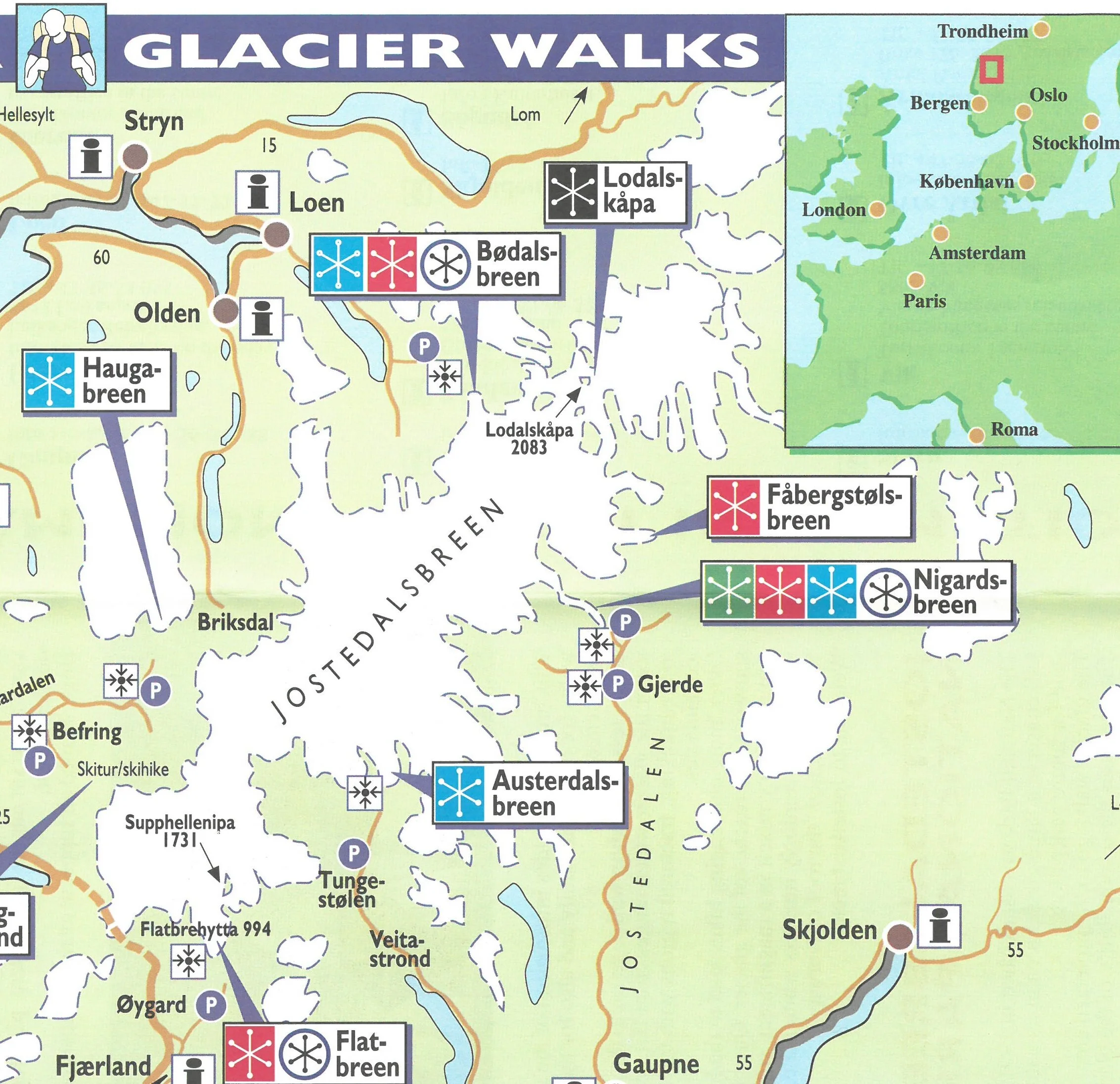
Excerpt from the Glacier Map in 1992.
Today, several of the same players are involved in the collaboration, but many others have also joined. The three visitor centers for Jostedalsbreen National Park; Norwegian Glacier Museum in Fjærland, Breheimsenteret in Jostedalen and Jostedalsbreen National Park Center in Oppstryn. The destination companies Visit Sognefjord, Visit Nordfjord and Sunnfjord Utvikling are also involved. Among the glacier guide associations we have Bre og Fjell, Briksdal Adventure, Fjord Active, Fjærland Guiding, Ice Troll, Jostedalen Breførarlag, Norgesguidene and Sogn og Fjordane Turlag. The management of Jostedalsbreen National Park is the contributor that provides the most financial support.
There has been and continues to be good cooperation and interest in continuing the publication of this brochure, which will be distributed in the core area around Jostedalsbreen these days. We hope that there will be a good season for safe glacier trips in 2019, and we thank everyone who has been involved in this effort for almost 30 years.

Glaciers shrink in 2018
The Norwegian Glacier Museum & Ulltveit-Moe Center for Climate Science are measuring the front position of two glaciers in Jostedalsbreen National Park. The measurements show that they are retreating in 2018.
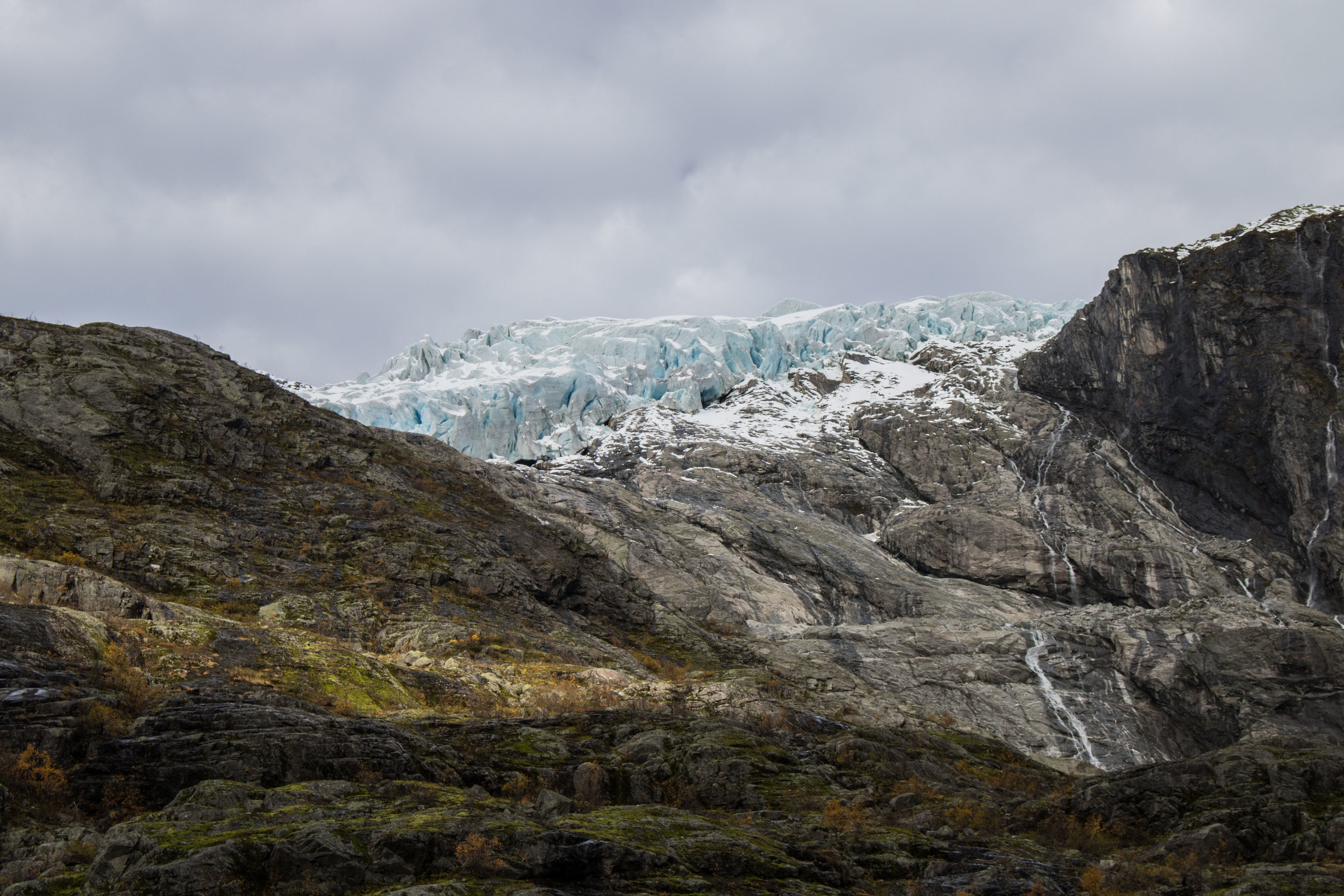
The front of Vetle Supphellebreen on October 11, 2018.
Front position measurements
After advancing for the past three years, Vetle Supphellebreen was supposed to retreat in 2018. The result was -6 meters. Ever since the Norwegian Glacier Museum resumed measurements in 2011, the glacier has remained relatively stable in terms of front position. The glacier was also monitored in the period 1899-1944 and then retreated almost 450 meters.
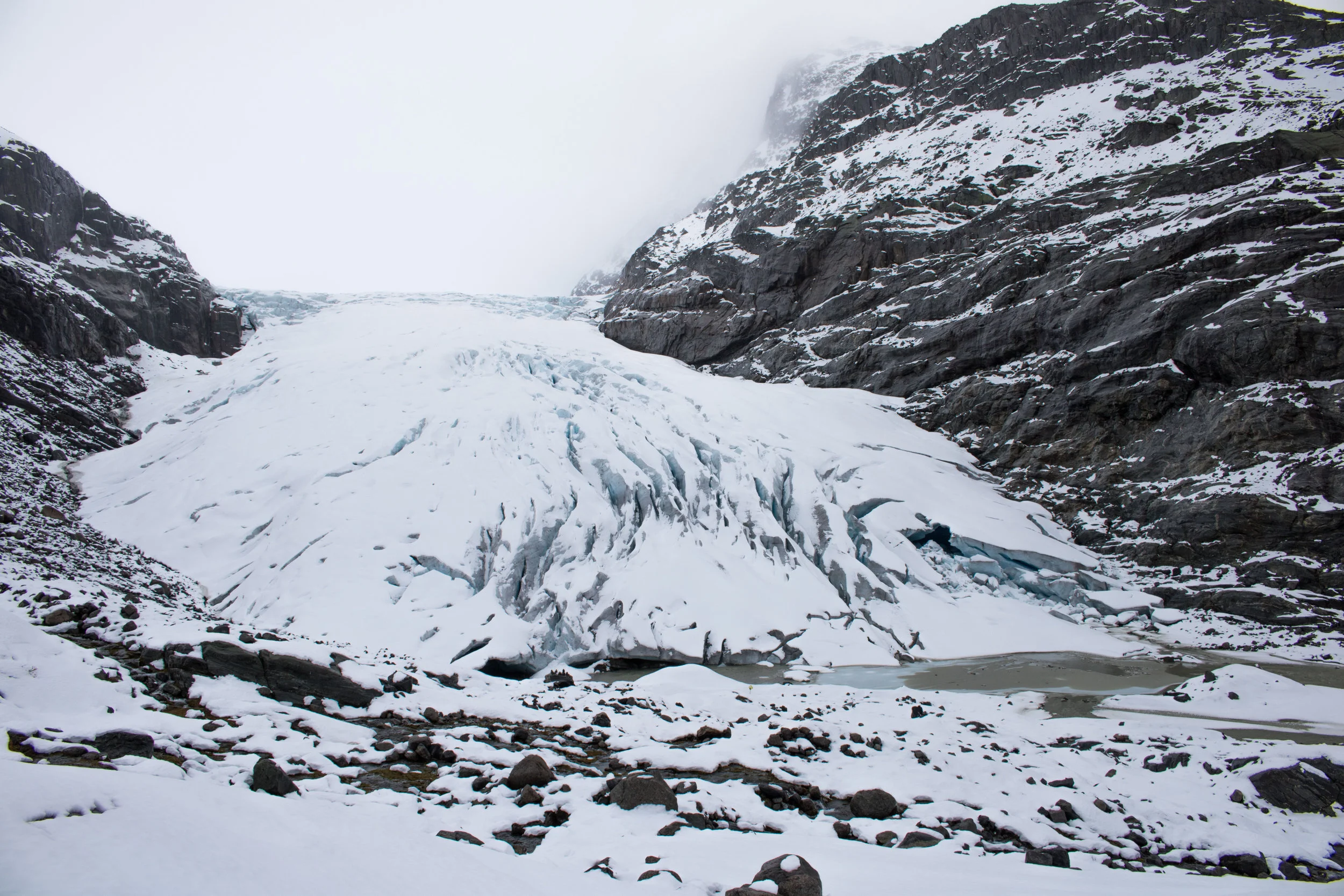
Haugabreen glacier in early October 2018.
The other glacier whose front position is measured is Haugabreen in Jølster. It decreased by 16 meters in 2018, and has retreated a total of 69 meters since we started measuring the glacier in 2013. In recent years, more and more water has appeared around the front of the glacier. In the long term, it may become difficult for those going on glacier hikes to get up onto the glacier dry-shod.
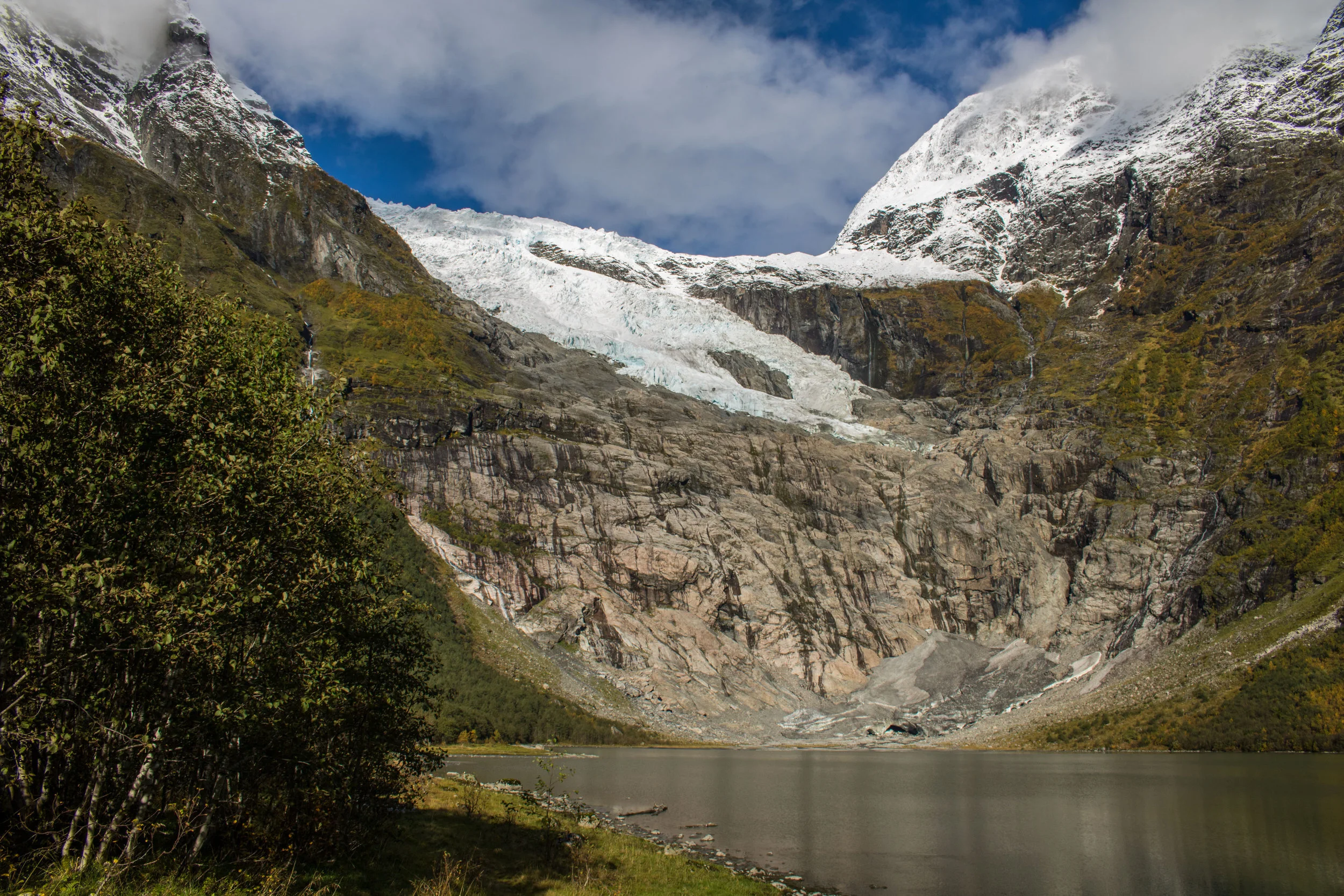
Bøyabreen on October 1, 2018.
In addition, the more well-known glacier arms, Bøyabreen and Store Supphellebreen, are also monitored by taking photographs every year. The melting of the glaciers makes front position measurements difficult, but photographing the glaciers allows us to document their development.
More information about front position measurements and other glacier measurements can be found on NVE's glacier data website . There you can read that glaciers in Norway shrank significantly in 2018, for example, Engabreen in Nordland retreated a full 140 meters and Nigardsbreen melted 81 meters.
Brear and climate
The hot summer took a toll on the snow and ice mass of Jostedalsbreen in 2018. The glaciers have been retreating for over 20 years since they advanced in the late 1990s. This is part of the long-term trend of glacier shrinkage in an increasingly warm climate. According to the World Meteorological Organization (WMO), 2018 is set to be among the warmest years ever recorded on the planet since temperature measurements began in the mid-19th century.
Breane is, among other things, our most important water reservoir. As much as 70% of all fresh water on earth is stored in the form of ice, and the glaciers thus provide a stable water supply for many people. In addition, the glaciers around the world are one of our best climate archives.